
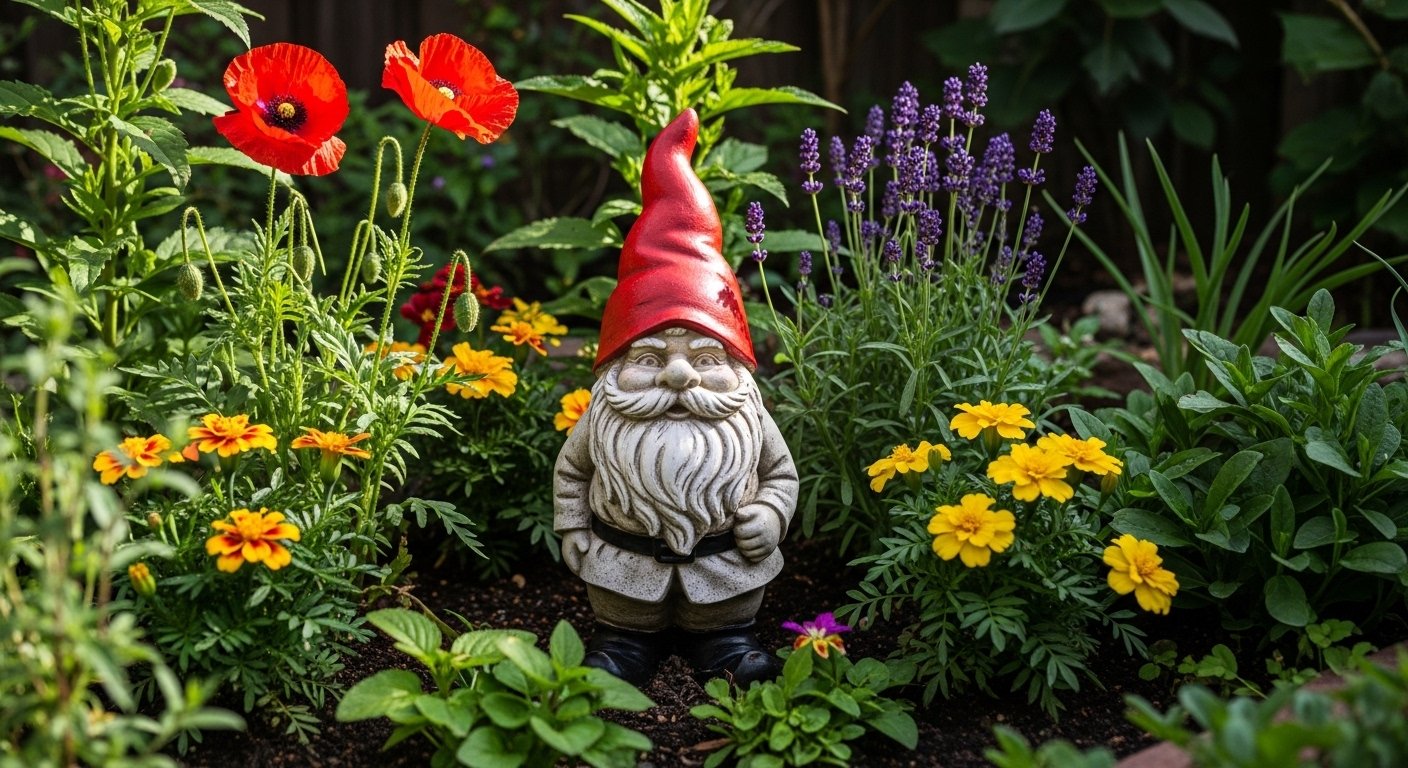
Let’s Talk About Garden Gnomes (Yes, Really)
Okay, I have a confession to make.
For years, I thought garden gnomes were kind of silly. You know the ones—little bearded dudes with pointy hats, just hanging out in flower beds like they own the place. I’d see them in neighbors’ yards and think “well, that’s certainly a choice.”
Then someone gave me one as a joke gift.
Little guy with a fishing pole, red hat, big white beard. I stuck him in a corner of my garden mostly to be polite, figuring he’d fade and crack and eventually get thrown out.
That was three years ago. He’s still there. And honestly? I’d miss him if he left.
Friends who visit always notice him. Kids love him. He’s become this weird little landmark in my yard. People take photos with him. One neighbor bought her own gnome because of mine.
So yeah, I get it now. Garden gnomes are kind of great.
Where These Little Guys Came From
Turns out gnomes have been around way longer than I realized.
Back in 19th century Germany, people started making these little statues based on old folklore. The stories said gnomes were earth-dwellers who protected treasures and helped things grow. Kind of like nature’s night watchmen.
They were hand-carved from clay or wood, carefully painted, and placed in gardens as good luck charms. Not just decoration—actual little guardians.
Somehow that tradition spread across Europe and eventually hopped the ocean to America. Now you can find them everywhere, from fancy gardens to tiny balcony planters.
So Many Gnomes, So Little Time
Here’s the thing about gnomes these days—they’re not all the same.
The classics
You know these. Red hats, bushy beards, cheerful faces. Often holding a shovel, lantern, or fishing pole. They look like they just clocked out of a fairy tale shift and decided to hang out in your petunias.
The weird ones
And I mean weird in the best way. Yoga gnomes. Skateboarding gnomes. Gnomes reading tiny books. Gnomes doing the limbo. Someone out there is making gnome versions of every human activity and honestly? I respect it.
The themed ones
Christmas gnomes with Santa hats. Halloween gnomes holding pumpkins. Even gnomes dressed as other fantasy creatures, which is either brilliant or deeply confusing depending on your perspective.
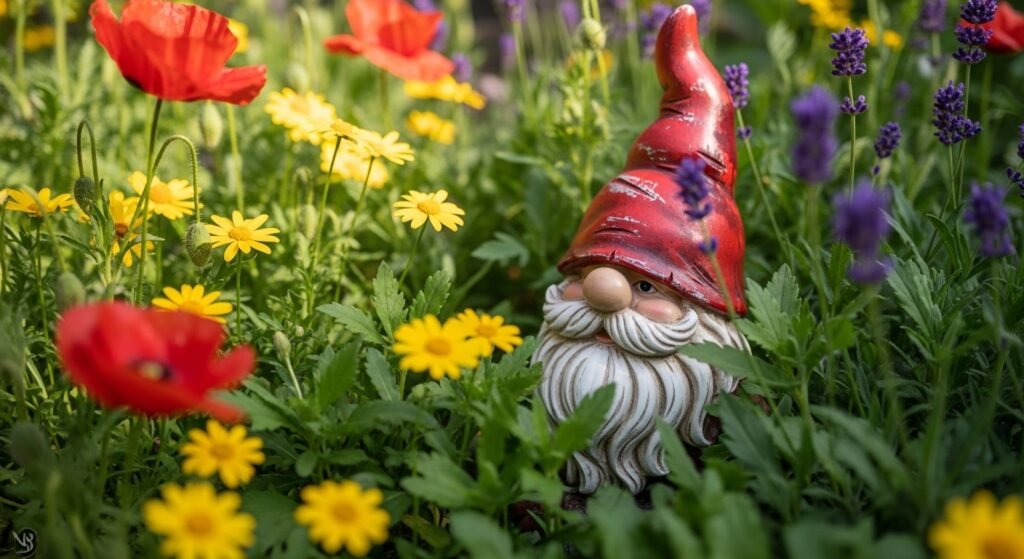
Picking Your Gnome (This Matters More Than You Think)
You’d think choosing a gnome would be simple. Walk into a store, grab one, leave. But once you start looking, it’s overwhelming.
Size matters
A tiny gnome will disappear in a big garden. A massive gnome next to delicate flowers just looks ridiculous. Think about scale. Where will it live? What’s around it?
Material decisions
Cheap plastic gnomes exist. They also crack and fade and look sad within months.
Better options:
- Resin (durable, holds color, budget friendly)
- Ceramic (beautiful, feels classic, can break)
- Concrete (heavy, permanent, will outlive you)
Think about your climate. Winter freezes? Intense summer sun? Pick accordingly or plan to bring delicate ones inside.
Vibe check
What energy does your gnome bring? Peaceful and serene? Mischievous and cheeky? Sleepy and unbothered? They all exist. Pick one that matches your garden’s personality.
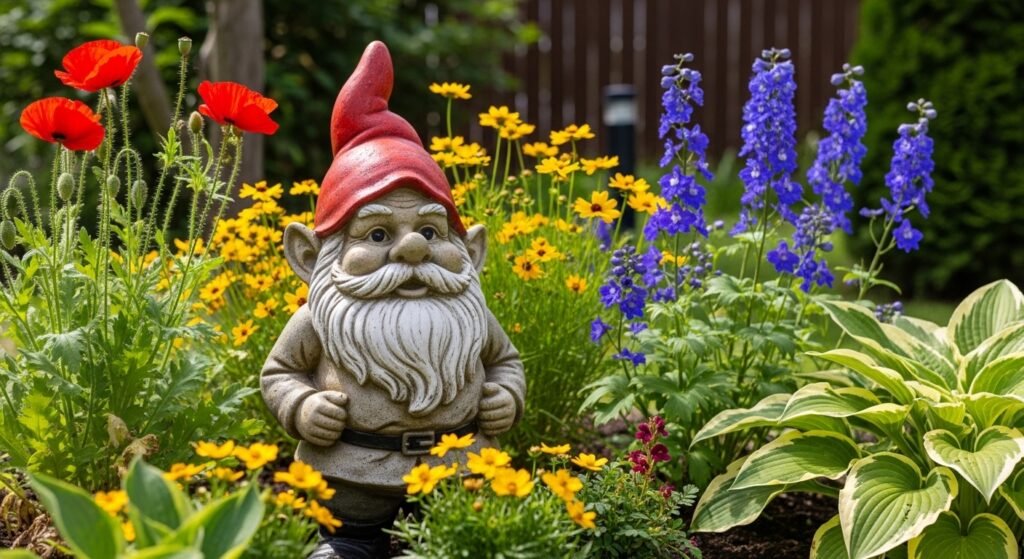
Where to Put the Little Dude
Placement is everything. A badly placed gnome looks like an accident. A well-placed one looks like it belongs there.
Hiding in flowers
Half-hidden among blooms, just peeking out? Classic move. Makes him look like he’s been there forever, shyly watching the world go by.
Guarding pathways
Put one along a garden path where people walk. It adds a little surprise, something to notice and smile at.
By water
If you’ve got a pond, fountain, or even just a birdbath, gnomes look natural near water. Like they’re fishing or just enjoying the view.
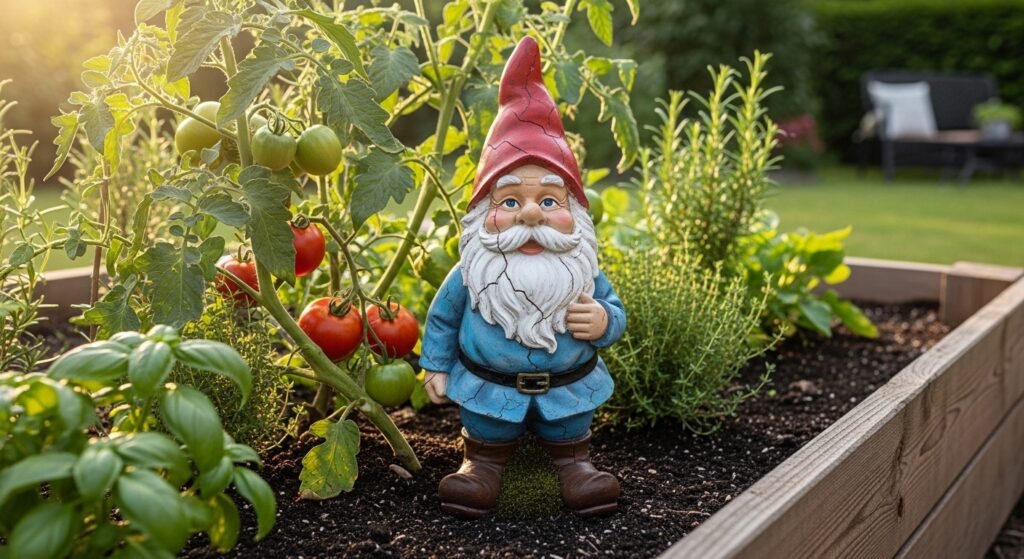
In the vegetable garden
This is my favorite. A gnome among the tomatoes feels right. Like he’s actually doing his old-school job, protecting your harvest.
Keeping Your Gnome Alive
Gnomes don’t need water or sunlight, thank goodness. But they do need occasional attention.
Every few months, wipe off dirt and moss. If you want them to stay bright, a clear outdoor sealant helps. And if winter gets nasty where you live? Bring ceramic or painted gnomes inside. Resin ones can usually tough it out.
Fun Stuff You Can Do
Once you have one gnome, the temptation to get more is real. Here’s where it gets interesting.
Start a village
Group a few together. Add tiny accessories—little benches, mini fences, pebble paths. Suddenly you’ve got a whole gnome neighborhood happening in your flower bed.
Seasonal rotations
Christmas gnomes in December. Pumpkin gnomes in October. Beach gnomes in July. Your garden can tell a story that changes with the calendar.
Hide and seek
Move your gnome around sometimes. Let people discover him in new spots. Kids especially love this—they’ll check every time they visit to see where he’s hiding.
Anyway…

Look, I’m not saying everyone needs a garden gnome. They’re not for everybody. Some people prefer sleek modern decor or serious minimalist landscapes.
But if you want something that makes people smile, that adds a little unexpected joy to an ordinary day? Gnomes deliver.
Mine sits near my vegetable bed, watching the tomatoes ripen. He’s been through rain and heat and one incident with a rogue soccer ball. Faded a bit, sure. But he’s still there, still smiling, still making visitors grin.
That’s worth something.
Got a gnome story?
Do you have one in your garden? Did you inherit one from someone? Or are you gnome-curious and thinking about taking the plunge?
Drop a comment and tell me about it. I genuinely love hearing these stories.
And if this made you smile, pass it to someone else who might need a little whimsy in their life today. 🧙♂️