
What I Learned Spending a Day in a Chinese Garden
I’m going to be honest with you.
Before I visited my first Chinese garden, I thought I knew what to expect. Pretty plants, nice pathways, maybe a pond. Like any other garden, just with a different name.
I could not have been more wrong.
The moment I stepped through that entrance, everything changed. The noise from the street just… disappeared. Not gradually either. One step and suddenly the city was somewhere else entirely.
I found myself on this winding path that didn’t seem in any hurry to get somewhere. It curved around rocks, passed under trees, opened up to a view of water, then curved again. Every few steps, the whole scene shifted. New angle, new feeling, new thing to notice.
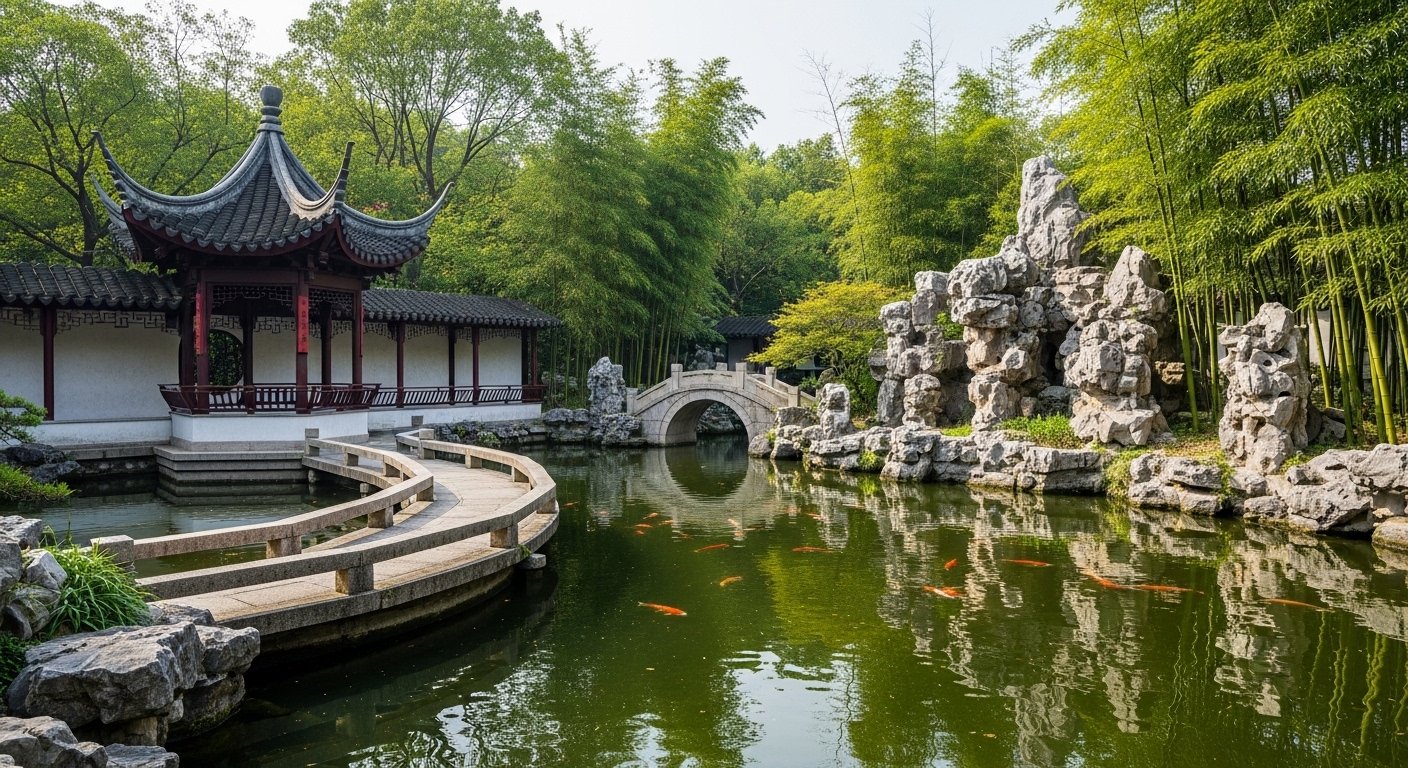
By the time I reached a little pavilion overlooking a koi pond, I’d completely lost track of time. Didn’t care either. I just sat there watching fish swim lazy circles, listening to water drip somewhere I couldn’t see, feeling my shoulders relax for the first time in weeks.
That’s when I understood. Chinese gardens aren’t just places to look at plants. They’re places designed to change how you feel.
It’s Not Just Decoration—There’s Actual Thought Behind It
Here’s the thing that blew my mind when I started reading about it later.
Every single thing in a Chinese garden means something. Nothing is random. Nothing is just there because it looks pretty (although everything does look pretty).
They’re trying to capture nature, not control it
Western gardens often feel very… organized. Straight lines. Symmetrical patterns. Plants trimmed into shapes. Everything in its place.
Chinese gardens do the opposite. They mimic nature—winding streams that look like they carved their own path, rocks stacked to look like miniature mountains, plants allowed to grow in ways that feel wild even though someone absolutely planned it that way.
It’s nature improved but not conquered.
Yin and yang everywhere
You know that whole opposite-energy thing? Light and dark, soft and hard, empty and full?
Chinese gardens live and breathe this balance. Rough rocks next to smooth water. Dark pavilions opening to bright clearings. Winding paths that hide views then suddenly reveal them.
Everything exists in relation to everything else. Nothing dominates. Nothing disappears.
Everything means something
Once you learn the symbolism, you start seeing it everywhere:
- Rocks aren’t just rocks—they’re mountains, strength, stability
- Water isn’t just water—it’s life flowing, adapting, persisting
- Bridges connect not just paths but ideas, worlds, states of mind
- Pavilions give you somewhere to stop and actually process what you’re experiencing
Knowing this stuff makes walking through the garden feel like reading a poem written in stone and leaves.
What You’ll Find in a Chinese Garden
If you ever visit one, here’s what you’ll probably see:
Water everywhere
Ponds, streams, little waterfalls. Always moving, always reflecting whatever’s above. If there are koi fish swimming around, that’s not just decoration—they symbolize luck and perseverance. But also they’re beautiful and fun to watch, so enjoy them regardless.
Rocks that look like mountains
Some of these rocks are genuinely weird looking. Full of holes, twisted shapes, strange textures. That’s on purpose. The best ones are called “scholar’s rocks” and people have collected them for centuries like art collectors buy paintings.
Pavilions to sit in
You’re not supposed to just walk through a Chinese garden. You’re supposed to stop. Rest. Sit in a pavilion and look out at what you just walked through. Let it soak in. Maybe drink some tea if there’s a tea house.
Bridges that curve
Straight bridges are efficient. Curved bridges make you slow down, change direction, see things from angles you wouldn’t otherwise notice. Every turn offers a new view, a new perspective.
Plants with purpose
Bamboo bends but doesn’t break—resilience. Pine stays green all winter—endurance. Plum blossoms bloom in early spring—hope and renewal. Even the plants are telling stories.
Different Gardens for Different Vibes
Not all Chinese gardens feel the same.
The classical ones in Suzhou
These are the famous ones. Small, intricate, incredibly detailed. They feel intimate, like walking through someone’s private dream of nature. Because that’s basically what they were—wealthy scholars and officials created them as personal retreats from the world.
The big imperial gardens
Emperors did everything bigger. Massive ponds, enormous rockeries, sprawling grounds. The Summer Palace in Beijing is basically a Chinese garden scaled up to “I am literally the emperor” proportions.
Modern versions
Lots of cities around the world have built Chinese gardens inspired by the classics. They mix traditional elements with local plants and materials. Different but still lovely.
How to Actually Enjoy Your Visit
Stop rushing
This is the main thing. You can’t “get through” a Chinese garden. That’s not how they work. Walk slow. Pause at turns. Sit in pavilions for no reason. Let the garden set the pace.
Bring something to capture moments
Camera, phone, sketchbook—whatever works for you. The light changes constantly. Shadows move. Reflections shift. You’ll see things worth keeping.
Learn a little before you go
Even reading this article counts. Knowing that rock over there represents a mountain, that bridge symbolizes transition—it genuinely changes how you experience the space. You’re not just looking at stuff. You’re understanding it.
Visit in different seasons
I’ve only been in spring and fall, but even that was completely different. Spring: fresh green, flowers everywhere, everything new. Fall: gold and red, quieter, more contemplative.
Winter’s supposed to be stunning too—bare branches and snow highlighting the shapes of rocks and architecture. Summer offers deep shade and water cooling the air. Each season tells its own story.
What I Still Think About
That rainy afternoon I mentioned earlier?
I sat in that pavilion for probably an hour. Just watched rain hit the pond. Listened to it on bamboo leaves. The koi barely moved. Neither did I.
At some point I stopped thinking about anything specific. Not work. Not problems. Not to-do lists. Just… sat there. Existing. Watching water ripple.
That doesn’t happen to me often. I’m usually thinking about five things at once, planning the next task, worrying about something or other.
But in that garden, with that rain, everything got quiet inside my head.
That’s what I remember most. Not the specific plants or rocks or architecture. Just the feeling of being somewhere that demanded nothing from me except presence.
Final Thought
A Chinese garden isn’t really about plants.
It’s about space. Intention. The careful arrangement of things so that walking through them changes something inside you. Slows you down. Opens you up. Lets you breathe differently.
You don’t need to know anything about Chinese culture to feel it. You just need to show up, walk slow, and pay attention.
The garden does the rest.
Have you ever been to one?
I’d love to hear about it. What stood out? What surprised you? Did you feel that quiet too, or was it something else entirely?
Drop a comment and tell me your story. And if this made you curious about finding a Chinese garden near you? Go for it. This weekend, next month, whenever.
Some things are worth making time for. 🏯