

How I Finally Made My Apartment Quiet Enough to Think
I used to think I was just someone who couldn’t focus.
I’d sit down to work, and within minutes, some noise would pull me out. Traffic. Neighbors. The guy upstairs who apparently rearranged his furniture every single night at 11pm. My own refrigerator making sounds I never noticed until I was trying to concentrate.
For a long time, I just accepted it. That’s apartment life, right? Noise happens. Deal with it.
Then the construction started.
Three months of jackhammers outside my window, starting at 7am sharp. I couldn’t work. Couldn’t sleep. Couldn’t even think straight. Something had to change.
That’s when I fell down the soundproofing rabbit hole. And honestly? Some of what I learned actually worked.
Here’s what I figured out, including the stuff that was a waste of time and money.
Step 1: Windows and Doors Are Liars
Here’s something that surprised me. You know how walls seem solid? Like sound should have a hard time getting through?
Windows and doors are completely different. They’re basically invitations for noise to walk right in.
The gap problem
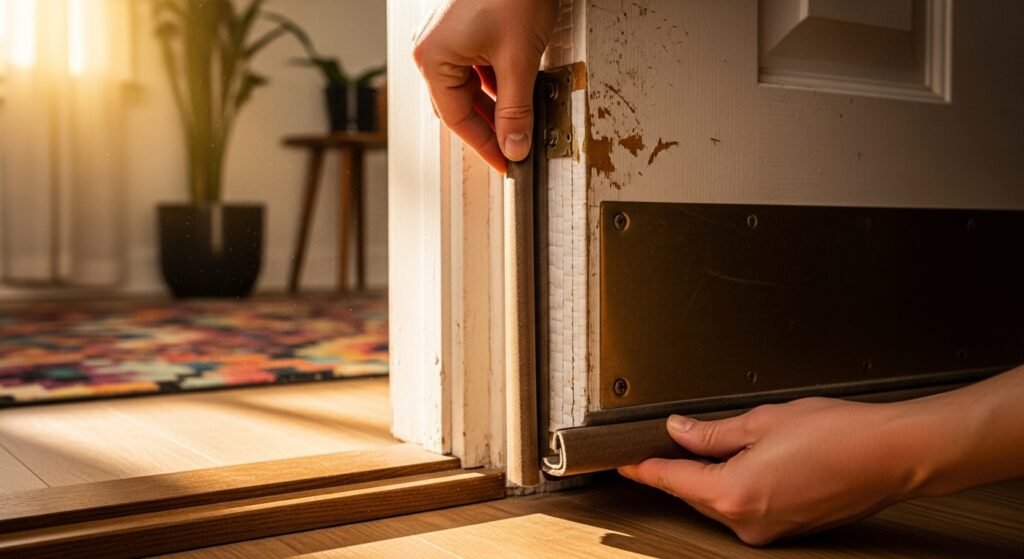
Even a tiny crack under a door lets in way more sound than you’d believe. Same with gaps around windows. The air leaks? Sound leaks too.
Door sweeps are cheap and easy. That little rubber flap at the bottom? Game changer. Weatherstripping around the door frame takes ten minutes and makes everything feel tighter.
My front door used to let in every hallway conversation. Now I hear nothing.
Windows are trickier
If you have old windows, sound just flows through. Like they’re not even there.
Heavy curtains help more than you’d expect. Not the flimsy decorative ones—actual thick, dense curtains. I hung some over my worst window and the difference was immediate.
If you own your place and want to go further, double-pane windows or acoustic window inserts are worth the money. But start with curtains. Way cheaper, still effective.
Step 2: Soft Stuff Eats Sound
Hard surfaces are echo factories. They bounce sound around like ping pong.
Soft things absorb it. Eat it. Make it stop bouncing.
Rugs are sound sponges
Hardwood floors look nice but sound terrible. Every footstep, every dropped item, every rolling chair—amplified.
I put down a thick rug in my office and suddenly the room felt… smaller? Quieter? Like the sound had nowhere to go so it just stopped.
If you have hard floors, cover as much as you can. Runners in hallways. Big rugs in main areas. Your ears will thank you.
Furniture matters too
Empty rooms sound hollow and echoey because there’s nothing to soak up noise.
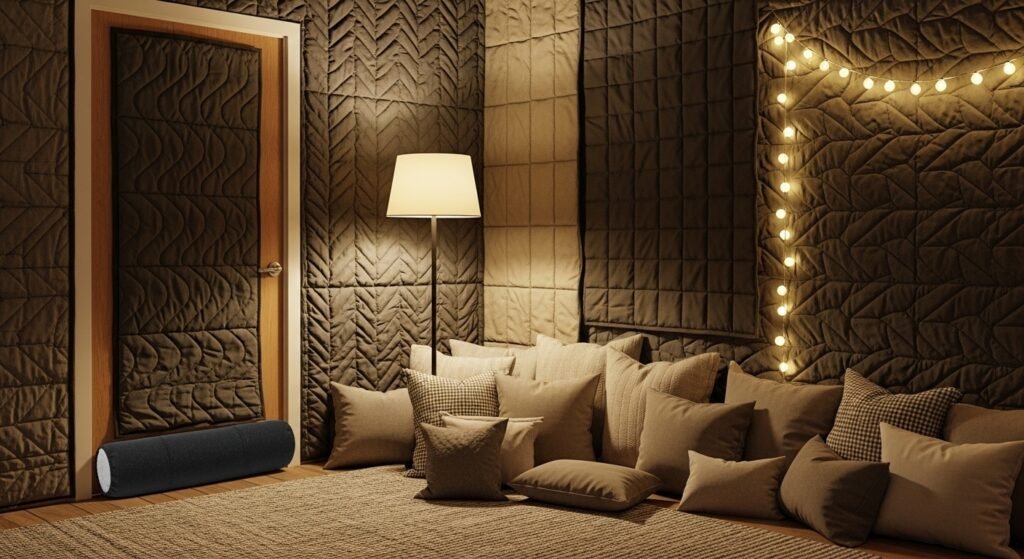
Fill your space with soft things. Cushions. Curtains. Fabric chairs instead of wooden ones. Even bookshelves full of books absorb sound way better than empty walls.
My living room got noticeably quieter after I added a big cushy sofa and some floor pillows. Not on purpose—I just wanted to be comfortable. The sound thing was a bonus.
Step 3: Acoustic Panels Aren’t Just for Studios
I always thought acoustic panels were for recording studios and weird audiophile people. Like foam squares all over the wall? Not my vibe.
Then I tried a few in my home office, just on the wall where sound seemed to bounce most.
Huge difference.
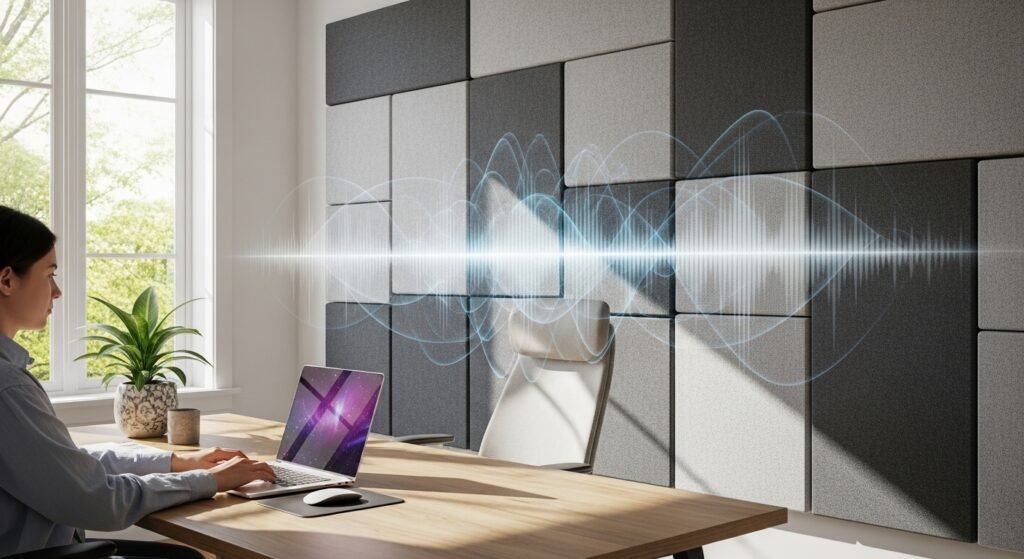
Not for blocking outside noise—they don’t really do that. But for killing echoes and making the room feel calm? Unbelievable.
And here’s the thing: they don’t have to look ugly anymore. There are fabric-wrapped panels that look like art. Geometric designs. Colors. You can even make your own if you’re crafty.
I put three small panels behind my desk and phone calls suddenly sounded clearer. Less echo. Less “where are you?” from people on the other end.
Step 4: Sometimes You Need Heavy Artillery
If you own your home and noise is a serious problem, you might need to get structural.
Walls are thin
Standard walls aren’t built for silence. They’re just wood and drywall. Sound vibrates right through.
Adding insulation inside walls helps. There’s special dense insulation made for soundproofing.
Another trick? Add another layer of drywall with something called “green glue” in between. It’s a compound that absorbs vibration. Expensive but effective.
Ceilings are the worst
If you have upstairs neighbors, you know. Every step. Every dropped object. Every mysterious thump at 2am.
Suspended ceilings or acoustic ceiling tiles can help. So can adding insulation above your drywall.
But honestly? This level of work is for people who plan to stay somewhere a long time. Renters shouldn’t bother with this stuff.
Step 5: Your Own Stuff Makes Noise Too
Here’s something I didn’t consider until later. Some of the noise bothering me was coming from inside the room.
My computer fans. The click of my keyboard. My speakers vibrating the desk.
Small fixes:
- Put speakers on isolation pads (little foam things that stop vibration)
- Get a soft mouse pad
- Consider a quieter keyboard if you type a lot
- Move buzzing electronics away from your work area
None of this blocks outside noise. But it makes your immediate space feel calmer, which helps your brain settle down.
Step 6: Furniture as Sound Barriers
This one feels almost too simple, but it works.
Bookshelves against shared walls? Massive difference. All those books absorb and block sound.
Same with big cabinets. Wardrobes. Even a tall plant in a heavy pot.
I moved a bookshelf against the wall I share with my neighbor and their TV got noticeably quieter. Not gone—but quieter.
The key is mass. Heavy, dense things block sound better than light things. Fill shelves with books, not knickknacks.
Step 7: DIY Tricks That Actually Work
Not ready to spend money? Try these:
Blanket walls temporarily
Thick moving blankets hung on walls absorb sound surprisingly well. Not pretty, but effective. Great for a home office if you don’t care about looks.
Draft stoppers
Those fabric tubes at the bottom of doors? They block sound too. Not completely, but enough to notice.
Pillow forts
Okay not literally. But creating a cozy corner with lots of cushions and blankets creates a little “quiet zone” where sound feels muffled. Great for reading or meditation.
Step 8: Sometimes Fighting Noise Isn’t the Answer
Here’s something I learned the hard way.
You can’t always win against noise. Some sounds will get through no matter what.
That’s where sound masking comes in.
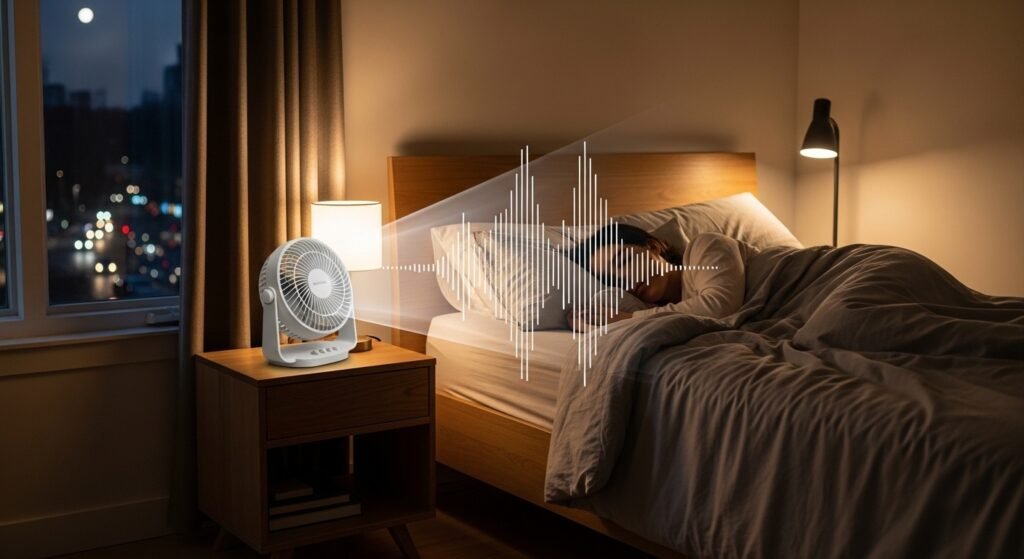
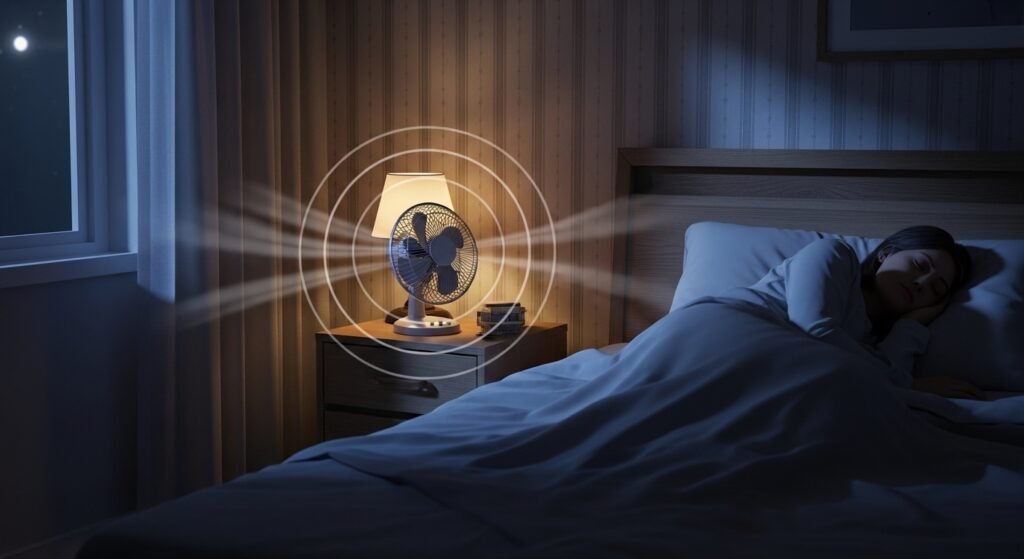
White noise machines don’t block sound—they cover it. Create a steady background sound that your brain stops noticing, and sudden noises get lost in it.
Fans work too. So do water fountains. Even certain apps on your phone.
I run a small air purifier in my bedroom constantly. The gentle hum covers up outside noises and helps me sleep.
Combining masking with physical soundproofing? That’s the sweet spot.
What I Actually Did (The Short Version)
My apartment isn’t perfectly silent. Probably never will be.
But here’s what got me from “I can’t think” to “this is actually peaceful”:
- Sealed my front door with weatherstripping and a door sweep
- Hung heavy curtains over the noisiest window
- Put thick rugs on all the hard floors
- Added a few acoustic panels behind my desk
- Moved a bookshelf against the shared wall
- Started running a fan at night
Total cost? Maybe $300. Total improvement? Massive.
I can work now. Sleep better. Actually enjoy being home.
The Truth About Soundproofing
Here’s what nobody tells you.
Perfect silence probably isn’t possible. Not in an apartment, not in a house near a road, not anywhere humans exist.
But “quiet enough” absolutely is possible. Quiet enough to focus. Quiet enough to sleep. Quiet enough to feel calm in your own space.
And you don’t need to rebuild your walls to get there. Start with the cheap stuff. See what works. Add more if you need it.
Every little bit helps. Every gap sealed, every soft surface added, every sound masked—they all stack up.
My neighbor still exists. Traffic still happens. The guy upstairs still rearranges furniture at weird hours.
But none of it bothers me anymore. The noise is there. I just don’t hear it the same way.
And honestly? That’s enough.
What about you?
Are you dealing with noisy neighbors? Traffic? Just want a quieter space to think?
Tell me about it in the comments. What have you tried? What worked? What was a total waste of time?
I read every comment and I’m always looking for new ideas myself.
And if this was helpful, pass it to someone else who’s been losing their mind over noise. We’ve all been there. 🎧