Let Me Tell You About the Sofa That Didn’t Fit
I was so excited.
Found this beautiful sectional online. Perfect color. Right price. Exactly what I’d been dreaming about for my new apartment. I clicked “buy” without hesitation, practically picturing myself lounging on it, living my best life.
Delivery day arrives. Two guys carry this massive box up the stairs. They open it in my living room, and I immediately know something’s wrong.
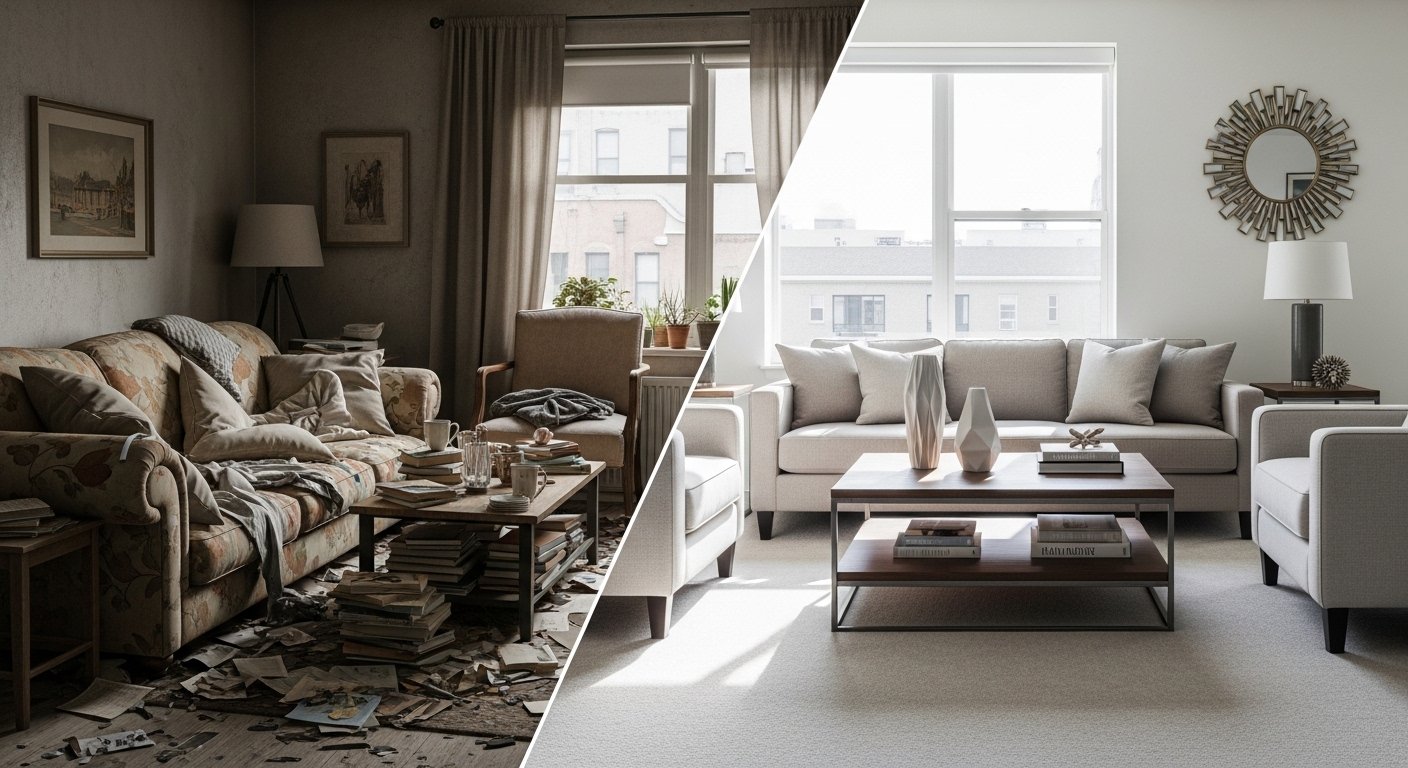
The sofa is huge. Like, takes-up-the-entire-room huge. There’s barely space to walk around it. My coffee table won’t fit. The whole place looks like a furniture showroom where someone forgot to leave walking paths.
Turns out I’d measured the room but forgot to account for… basically everything. Doorways. Traffic flow. The fact that rooms need space to actually move around in.
That sofa went back. I lost money on delivery fees and felt like an idiot for weeks.
So yeah, I’ve learned a thing or two about measuring since then. Let me save you from making the same mistakes.
Step 1: Get the Right Stuff
You don’t need fancy tools. Just:
- A tape measure (the longer the better—25 feet is good)
- Paper and pencil (or phone notes, whatever)
- Maybe a laser measure if you’re fancy or have really big rooms
- Graph paper if you want to do old-school floor plans
That’s it. You’re already equipped.
Step 2: Measure the Whole Room
Start with the basics.
Length and width of the room. Wall to wall. Write it down.
Ceiling height too. This matters for tall furniture, light fixtures, all that.
But here’s the thing—rooms aren’t perfect rectangles. Not usually.
My living room has this weird alcove where the previous owner probably had a desk. If I’d just measured the main area and ignored that, I would’ve missed usable space.
Walk the room. Note every corner, every bump, every weird architectural choice.
Measure twice. I cannot stress this enough. I’ve messed up because I wrote down “12 feet” when it was actually “11 feet” and didn’t catch it until too late.
Step 3: Doors and Windows Matter More Than You Think
That sofa disaster I mentioned? Part of the problem was the front door.
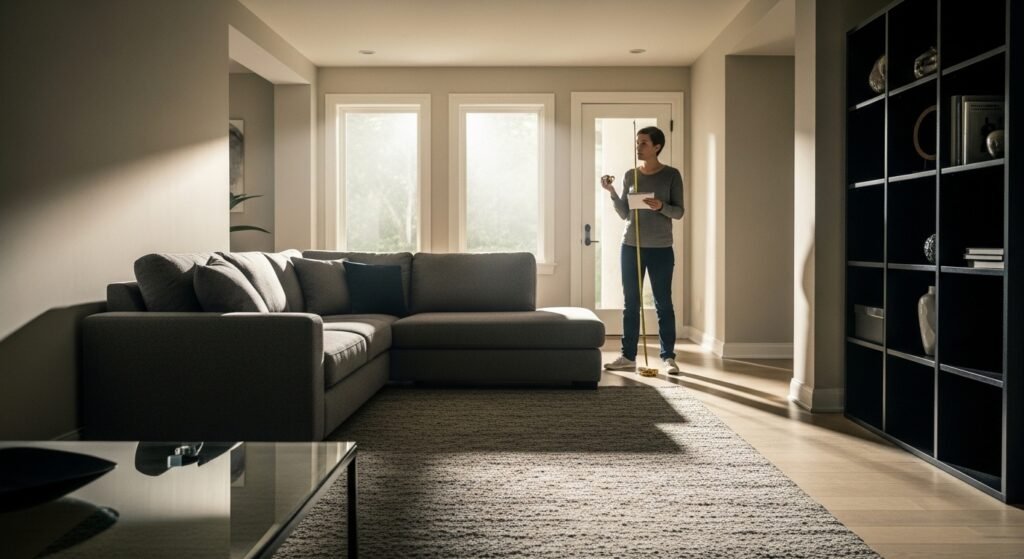
I measured the room fine. Forgot to measure the doorway.
Some doors are narrow. Some have weird angles. Some open inward and eat up floor space you thought was available.
Measure:
- Door width and height
- Which way doors swing
- Window sills and how far they stick out
- Radiators or heating vents
Nothing worse than finding the perfect spot for a bookshelf, only to realize it blocks a door or covers a vent.
Step 4: Don’t Ignore the Stuff Already There
Built-ins. Fireplaces. Columns. Random structural choices that previous owners thought were great ideas.
Measure all of it.
I’ve got a radiator in my dining room that sticks out way farther than I ever noticed until I tried to put a cabinet next to it. Now I know exactly how much space it needs.
Also, note where outlets and light switches are. Covering those with furniture is annoying at best, dangerous at worst.
Step 5: Think About How You’ll Actually Move
Here’s something nobody told me when I started decorating.
Rooms need paths.
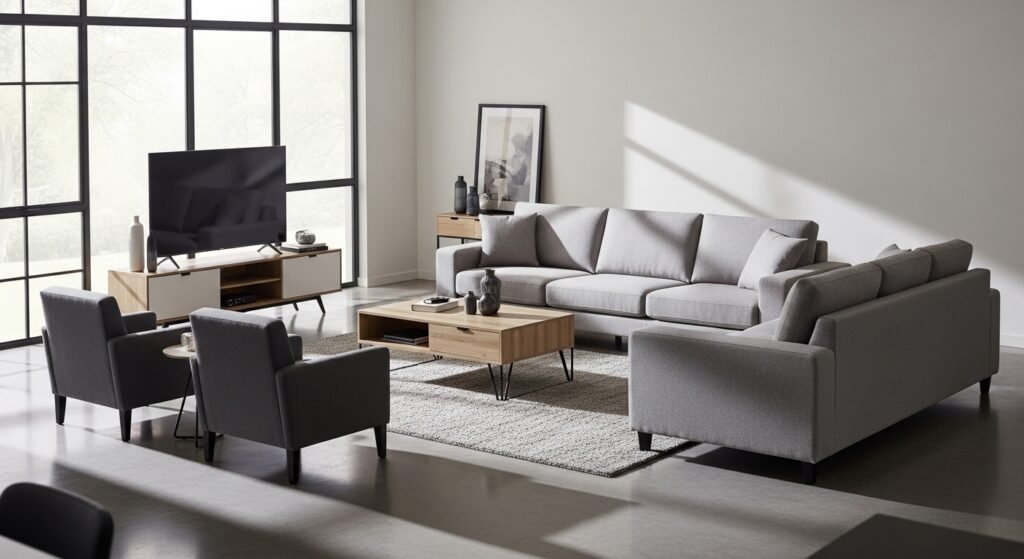
You might fit a giant sectional in your living room by pushing it against every wall. But if you have to sideways-shuffle past it to get to the kitchen, you’re going to hate it within a week.
Rule of thumb: Leave at least 2-3 feet of walking space around furniture. More if it’s main traffic areas.
Think about how people actually move through the space. Where do you walk when you come in? Where’s the path to the couch? Can you get to the window to open it?
Furniture should work with your movement, not against it.
Step 6: Measure the Furniture Itself
This sounds obvious, but you’d be surprised.
I once bought a dresser online that looked perfect in the photos. When it arrived, I realized the drawers needed space to actually open—like a foot of clearance in front. Had to rearrange my whole bedroom.
So when you’re looking at furniture, don’t just check the overall size. Think about:
- How much space do drawers need to open?
- How far does a chair recline?
- Does the table have leaves that extend?
- Where are the legs? (Some sofas have legs that stick out further than the cushions)
If you’re measuring existing furniture, do it from every angle. If you’re shopping, find the full specs online or ask.
Step 7: Make a Map
This is where it gets fun.
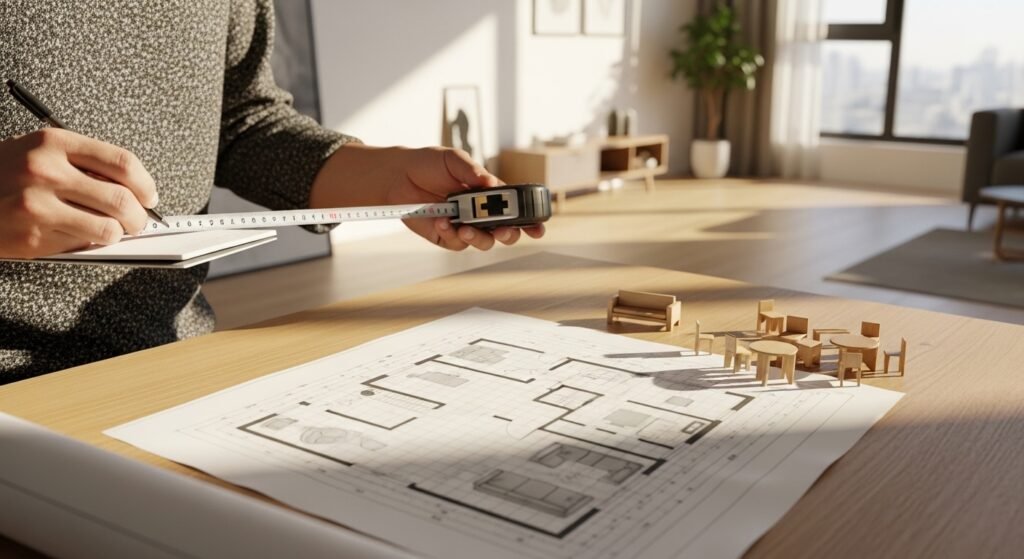
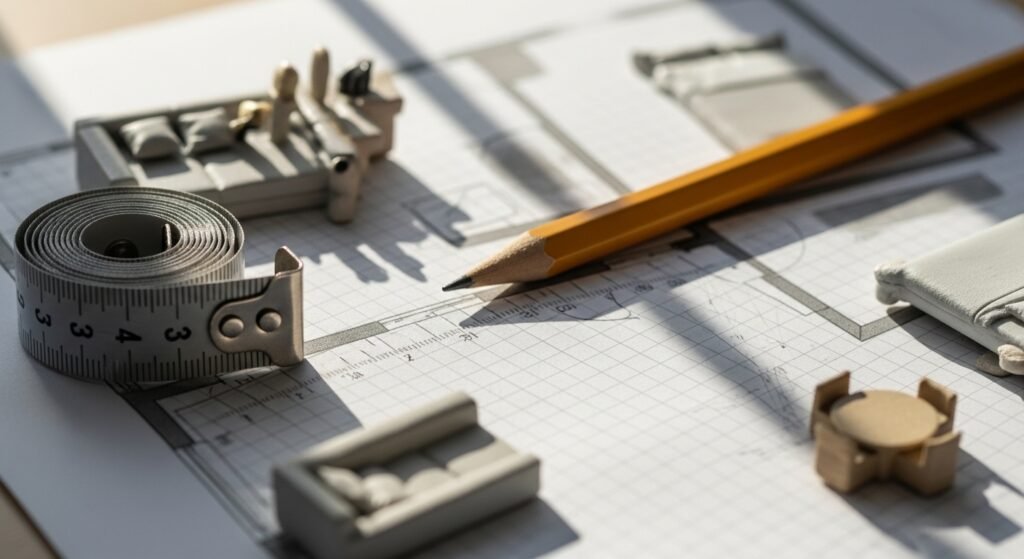
Draw your room on graph paper. Make it to scale—1 square = 1 foot is easy.
Then draw cutouts of your furniture to the same scale. Cut them out. Move them around.
This sounds like kindergarten stuff, but it works. You can try ten layouts in ten minutes without moving anything heavy.
There are apps for this now too. I’ve used a few. They’re fine. But honestly, paper and scissors still work great and don’t require learning new software.
Step 8: Consider Clever Furniture
Small room? Weird layout? Multi-functional furniture might save you.
Sofa beds. Storage ottomans. Nesting tables. Drop-leaf desks.
But here’s the catch—measure these even more carefully. A sofa bed needs space to actually open. A drop-leaf table needs room for the leaves to go up.
I have a friend who bought a beautiful expandable dining table without measuring the expanded size. Now she can only fully extend it when she moves the whole thing away from the wall. Which she never does. So it’s basically always a small table.
Measure for how you’ll actually use it, not just how it looks closed up.
Step 9: Look Up
This one gets forgotten constantly.
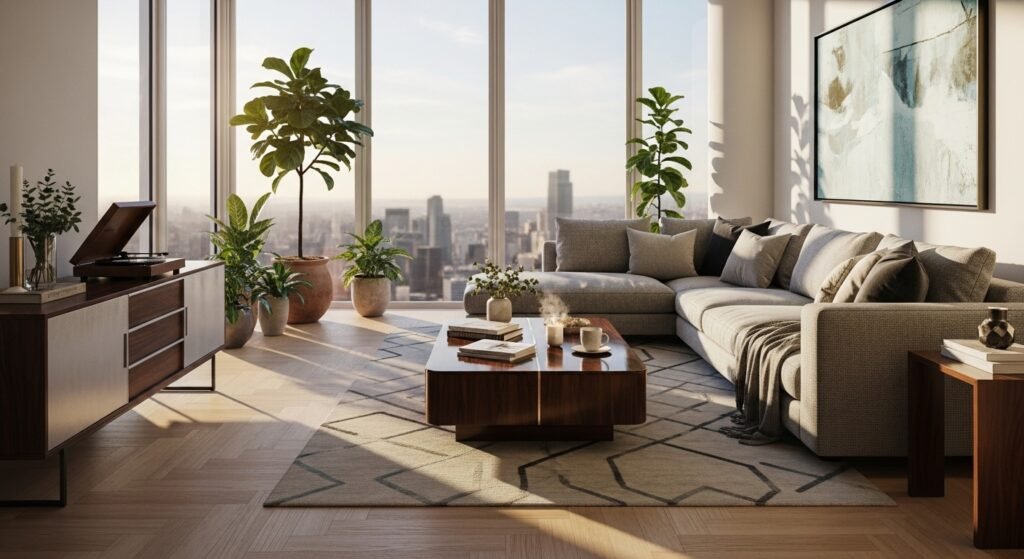
Ceiling height matters for tall bookshelves, wardrobes, and cabinets. Nothing worse than finding the perfect piece and realizing it’s six inches too tall.
Also, light fixtures. My dining room has a lovely pendant light that hangs down exactly where a tall cabinet would go. If I hadn’t measured, I’d have a cabinet bumping into it constantly.
Fans too. They need clearance.
Step 10: Check Everything Before Buying
Before you hit “purchase” or hand over your credit card:
- Compare room dimensions to furniture dimensions one more time
- Check doorway measurements (including the path from outside to the room)
- Make sure you’ve accounted for clearance space around furniture
- Consider whether delivery people can actually get it inside
Most furniture returns aren’t free. Delivery fees aren’t refundable. A few extra minutes of checking saves money and frustration.
How I Do It Now
After that awful sofa experience, I developed a system.
- Measure the room. Walls, doors, windows, obstacles. Write it all down.
- Measure paths and traffic flow. Walk it out.
- Sketch the room on graph paper. Include everything.
- Find furniture I like. Get full dimensions.
- Draw cutouts or use an app to test layouts.
- Measure the delivery path. Front door, hallways, corners.
- Order, but keep the measurements handy just in case.
Takes maybe an hour total. Has saved me so many headaches.
The Truth About Furniture Shopping
Here’s what I’ve learned.
The perfect piece exists. But “perfect” means different things.
A sofa can be gorgeous but wrong for your space. A table can be exactly your style but make your dining room unusable.
Measurements aren’t there to limit you. They’re there to help you find things that actually work in your actual life.
That sectional I wanted? I eventually found one that fit. Smaller scale. Different configuration. Still looks great, but now I can actually walk through my living room.
Worth the extra effort.
What about you?
Have you ever had a furniture disaster? Something that looked perfect online but turned into a nightmare in person?
Tell me about it in the comments. Misery loves company, and also your story might save someone else from the same fate.
And if this was helpful, pass it to a friend who’s about to buy furniture. They’ll thank you later. 🏡📏