
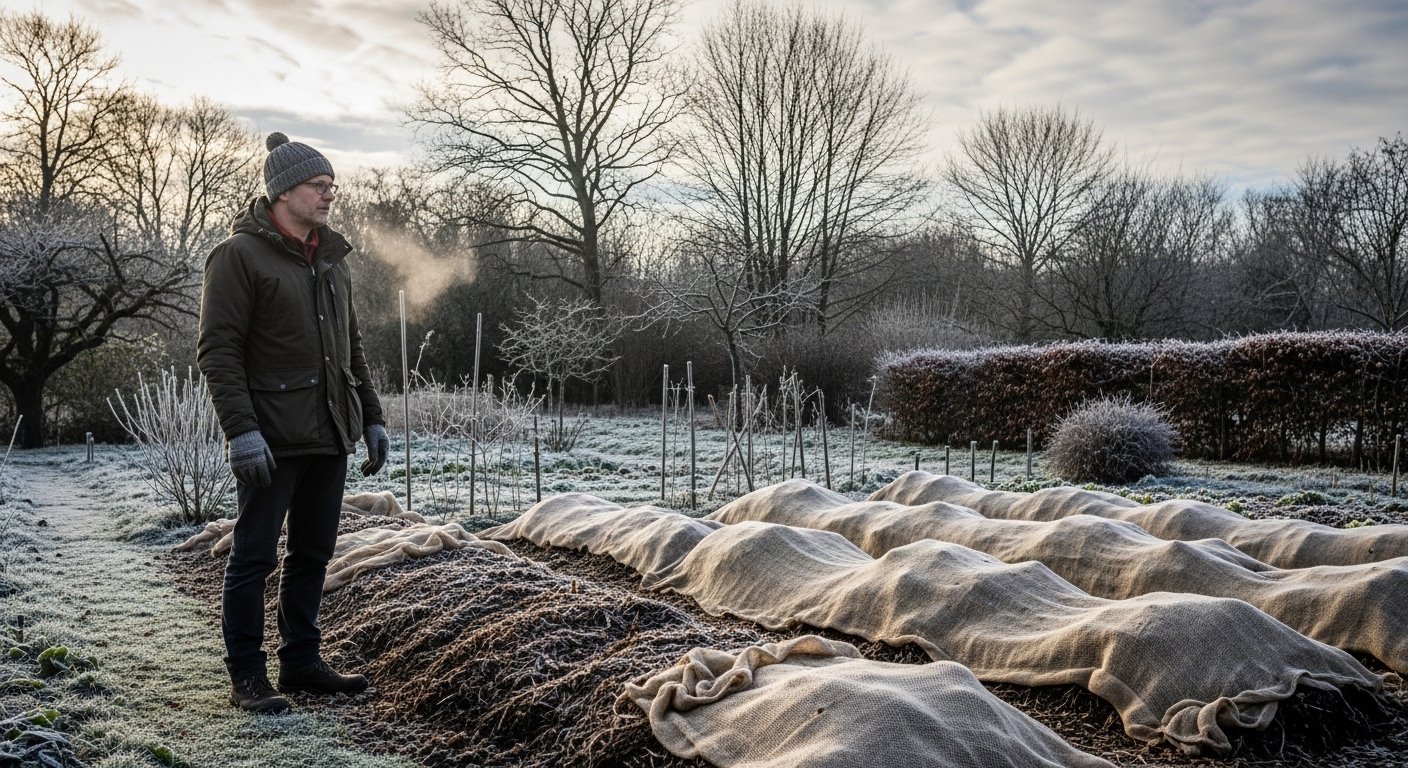
Don’t Make the Same Winter Mistakes I Did
Let me tell you about the winter I killed half my garden.
I’d had a great summer. Tomatoes everywhere. Flowers blooming like crazy. Herbs I actually used for cooking. I was feeling pretty proud of myself, honestly.
Then winter came, and I just… did nothing. Assumed everything would figure itself out. Plants have survived for millions of years without me, right? They’d be fine.
They were not fine.
Come spring, my perennials were mush. My shrubs looked sad and broken. Even some things I thought were hardy had just given up and died. I stood in my empty garden feeling like an absolute failure.
That’s when my neighbor—the one with the gorgeous yard—walked over and gently explained that plants need a little help sometimes. Who knew?
I’ve learned a lot since that depressing spring. Now I’ve got a winter routine that actually works, and my garden bounces back every year like nothing happened.
Here’s what I wish someone had told me before that first winter.
Step 1: Clean Up, But Don’t Go Crazy
You do need to clean up your garden before winter. But there’s a right way and a wrong way.
Remove the obvious stuff
Dead annuals that won’t come back? Pull them. Diseased plants that looked rough all season? Definitely remove those—they’ll just spread trouble if you leave them.
Vegetable plants that have given up for the year? Out they go.
Leaves are complicated
A thick layer of wet leaves smothering everything is bad. It traps moisture, invites pests, and turns into a slimy mess.
But a light layer of leaves? That’s basically free mulch. I rake some into my garden beds intentionally. They break down over winter and feed the soil.
Pruning requires restraint
Here’s where I messed up early on. I’d prune everything like crazy, trying to make it “tidy” for winter.
Turns out, pruning stimulates growth. New growth right before freezing? Dead growth.
Now I only remove dead or obviously damaged branches. Anything healthy-looking gets left alone until spring. The plants know what they’re doing better than I do.
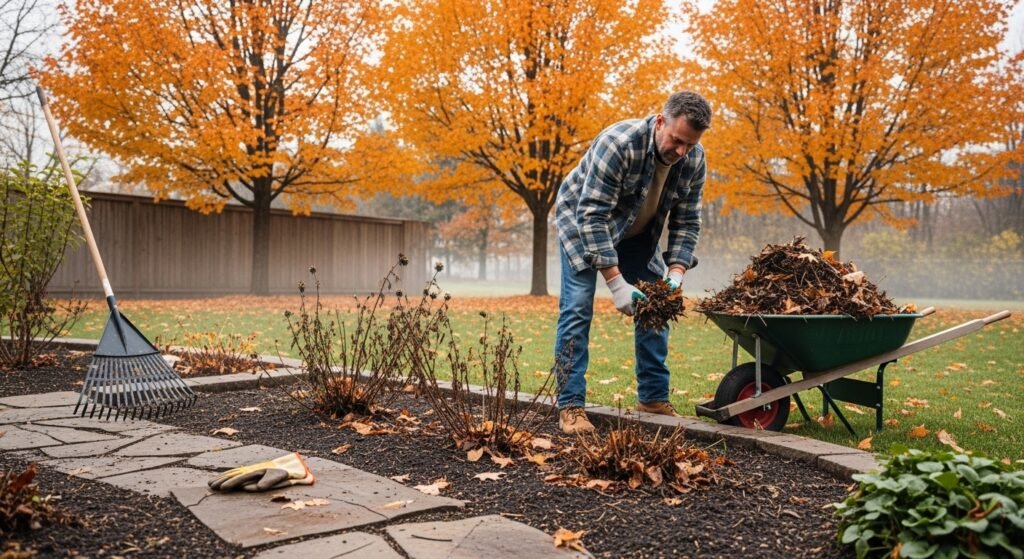
Step 2: Mulch Is Basically a Blanket for Your Soil
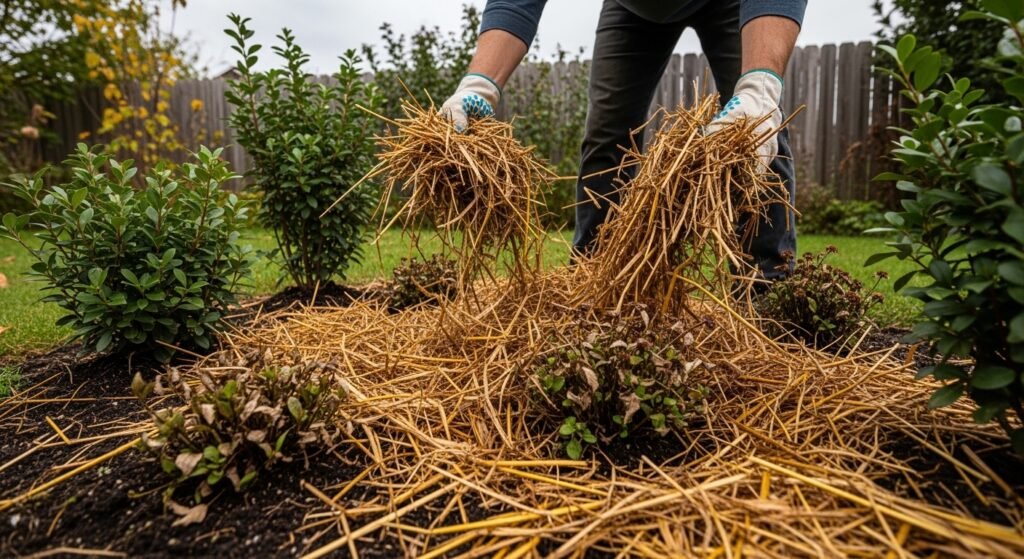
Think of mulch like a winter coat for your plant roots.
It keeps soil temperature steady instead of constantly freezing and thawing, which plants hate. It holds moisture in. It protects against wind.
What to use:
- Straw or hay (great for vegetable gardens)
- Shredded leaves (free and effective)
- Wood chips or bark (good for shrubs and trees)
- Pine needles (work well, smell nice)
How to do it right:
Spread 2-4 inches around plants, but keep it away from stems and trunks. Piling mulch right against the base is like wearing a coat pulled up over your head—it causes rot and invites pests.
I do this after the ground freezes slightly, usually late fall. Mulching too early can confuse plants and delay their natural winter preparation.
Step 3: Some Plants Need Extra Help
Not all plants are created equal when it comes to winter toughness.
Tender plants need protection
I’ve got a few hydrangeas that are slightly dramatic about cold weather. For them, I use:
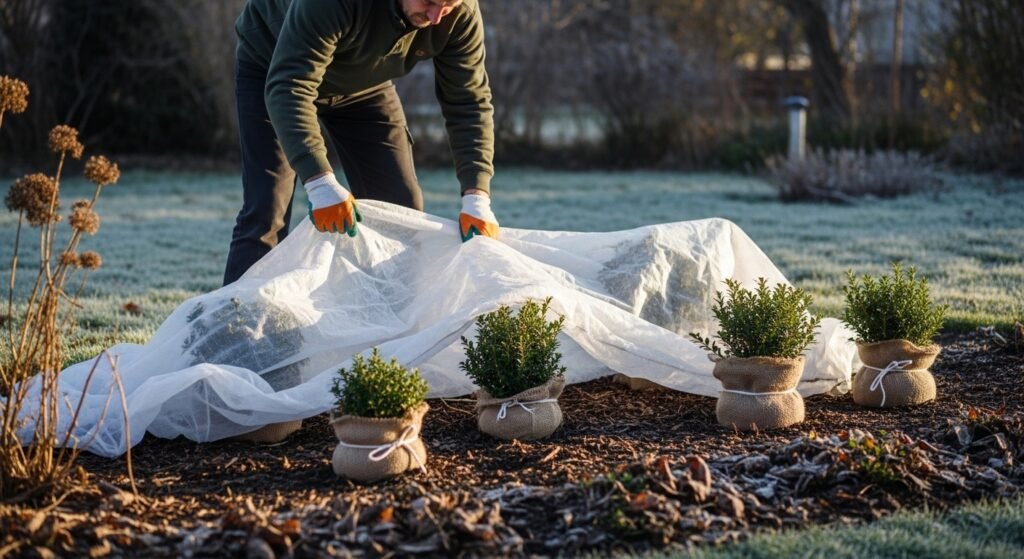
- Cloches (those little glass or plastic covers) for smaller plants
- Row covers draped over hoops for vegetable beds
- Burlap wrapped around shrubs that need extra help
Trees and young shrubs
Young trees with thin bark? Wrap them. Heavy snow can split branches, and sunscald (where winter sun damages bark) is a real thing.
I use burlap or tree wrap, not plastic. Plastic traps moisture and causes more problems.
Potted plants are vulnerable
Plants in containers have zero ground insulation. Their roots are just sitting there, exposed to freezing from all sides.
I move pots into my garage or against the house foundation where it’s slightly warmer. If I can’t move them, I group them together and wrap the whole group with burlap or bubble wrap.
Step 4: Water Before Freeze
This sounds counterintuitive. Water plants… before winter? Won’t that just turn into ice?
Here’s the thing: dry soil freezes harder and damages roots more than moist soil. Moist soil actually holds heat better.
A few days before the first hard freeze hits, I give everything a deep watering. Not a sprinkle—a real soak.
Then I stop. Watering during freezing weather just creates ice, which is not helpful.
Step 5: Feed Your Soil for Next Year
Winter is when soil gets a chance to rest and rebuild. You can help.
Add compost
I spread a thin layer of compost over my vegetable beds and around perennials in late fall. It breaks down slowly over winter and feeds the soil by spring.
Fertilizer choices matter
Use slow-release or organic fertilizers now. Avoid high-nitrogen stuff—that encourages leafy growth, which is the last thing plants need heading into cold weather.
Test your soil
Winter is a good time to do a soil test. Those little kits tell you pH and nutrient levels. Then you can order amendments and be ready to go when planting season starts.
Step 6: Take Care of Your Tools
This is the boring but necessary part.
Clean everything. Dirt on tools holds moisture, which causes rust.
Sharpen blades on pruners and shovels. You’ll thank yourself in spring.
Drain hoses and bring them inside. A frozen hose cracked and ruined my first year. Now I coil them up and store them in the garage.
Oil metal parts. Wipe wooden handles with linseed oil if you’re feeling fancy. Basically, treat your tools like they cost money—because they do.
Step 7: Pests Don’t Take Winter Off
Just because it’s cold doesn’t mean garden problems disappear.
Rodents love winter. They nest under mulch and eat bark off young trees. I’ve lost fruit trees this way.
Now I use:
- Hardware cloth around vulnerable tree bases (buried a few inches deep)
- Netting over shrubs that rabbits find tasty
- Natural repellents around beds that had problems before
Keeping garden beds clean also reduces places for overwintering insects. Less mess, fewer bugs next year.
Step 8: Plan While You Wait
Winter is actually my favorite planning time.
I sit inside with hot coffee and garden catalogs, dreaming about next year.
- Sketch new bed layouts
- Order seeds before they sell out
- Make notes about what worked and what didn’t
- Research problems I had (like whatever ate my beans last summer)
Having a plan means less scrambling when spring hits. And honestly? It keeps me excited about gardening even when it’s freezing outside.
What I Do Now (My Simple Routine)
These days, my winter prep looks like this:
- Clean out dead stuff, but leave some for wildlife/insects
- Mulch everything generously
- Wrap vulnerable shrubs in burlap
- Move pots to shelter
- Water deeply before freeze
- Spread compost on empty beds
- Clean and store tools
- Protect trees from rodents
- Sit inside and make plans
Takes a weekend. Saves me so much grief come spring.
The Big Lesson
That first winter when I lost half my garden taught me something important.
Plants are tough. They want to live. But they also evolved with help—leaves falling around them, snow insulating them, cycles that worked for thousands of years.
Our gardens aren’t natural, exactly. They’re curated. We’ve put plants where they might not naturally grow, arranged them how we want, asked them to perform for us.
So helping them through winter isn’t cheating. It’s just finishing what we started.
A little work in fall means a garden that bounces back fast in spring. Less replanting. Less money spent. More time enjoying instead of replacing.
And honestly? Standing in my garden on that first warm spring day, watching things wake up healthy and strong? Best feeling in the world.
What about you?
Do you have a winter garden routine? Ever lost plants to frost and learned the hard way like I did?
Drop a comment and tell me your story. I read every single one and I’m always looking for better ideas.
And if this was helpful, share it with someone who’s staring at their garden right now wondering what to do before snow flies. We’ve all been there. ❄️🌿