
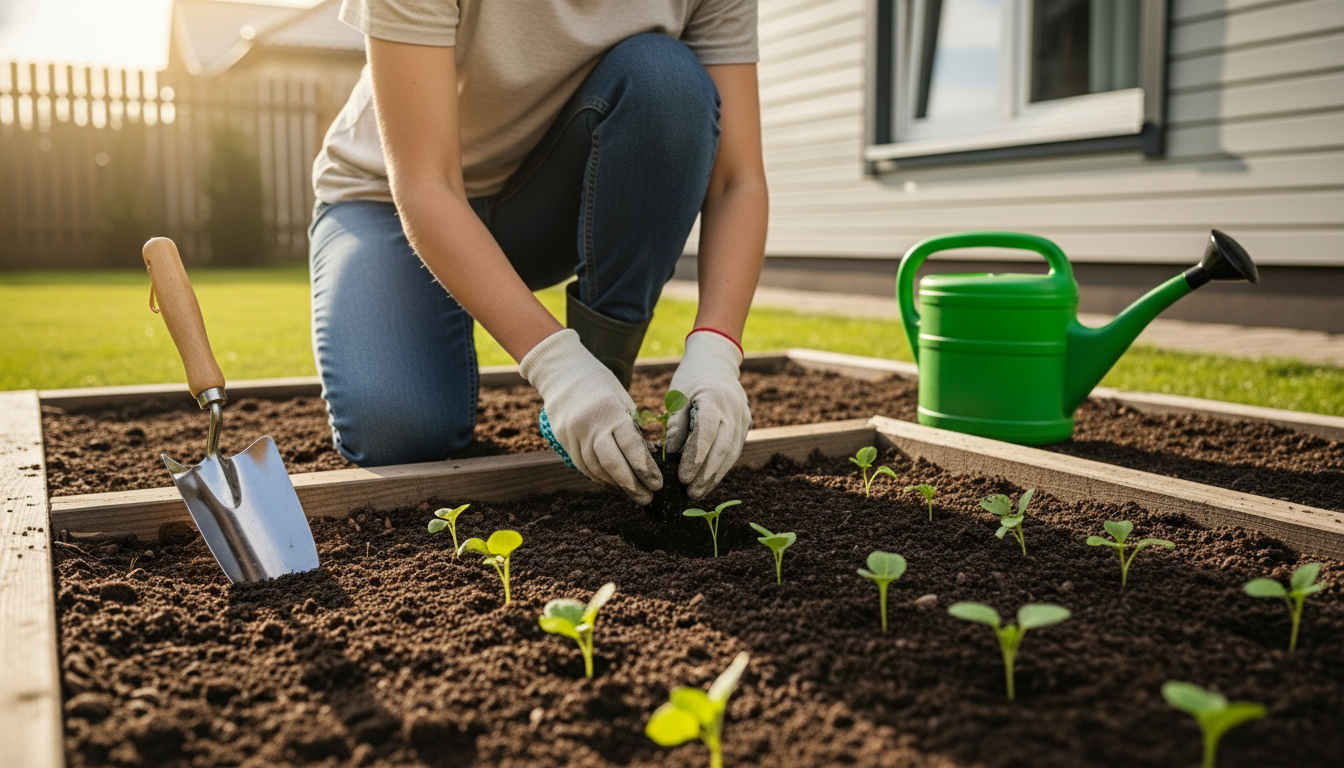
So You Want to Start a Garden? Here’s What I Wish Someone Had Told Me
I killed a lot of plants before I grew anything worth keeping.
Like, a lot. My first tomato plant lasted about three weeks. The basil I bought at the farmers market was dead in five days. Don’t ask about the mint—that thing actually took over a whole corner of my yard before I finally gave up and let it have its way.
Point is, I started exactly where you probably are right now. Wanting to garden. Having no idea what I was doing. Killing things accidentally while meaning well.
But here’s the thing nobody tells you when you’re staring at seed packets feeling overwhelmed: every gardener started somewhere. Even the ones with perfect raised beds and Instagram-worthy harvests killed plants along the way. They just don’t post those pictures.
So if you’re thinking about starting a garden, do it. Just maybe learn from some of my mistakes first.
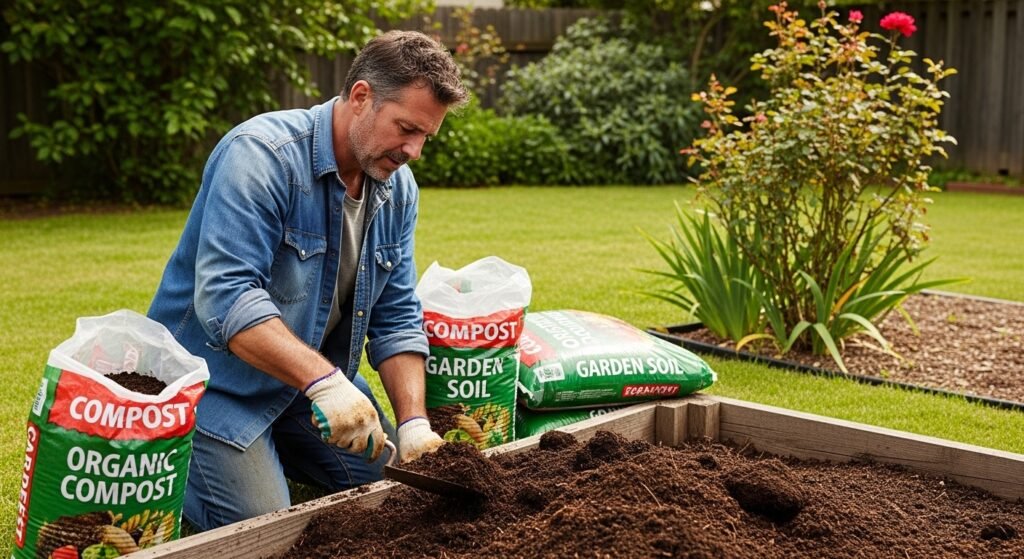
Step 1: Figure Out Where Stuff Will Actually Grow
This sounds obvious, but I promise you—I’ve made this mistake multiple times.
You need to find a spot that gets enough sun. Most vegetables and flowers want at least 6 hours of direct light. Not filtered light. Not “kinda bright” light. Direct sun.
Go outside at different times and watch your yard. That corner that’s gorgeous at 10am might be totally shaded by 2pm. The spot that seems perfect could be underwater every time it rains.
Also think about how you’ll reach everything. If you bury your garden in a far corner of the yard, you won’t water it. You won’t weed it. You’ll forget it exists until everything is dead or overtaken by something scary.
Start somewhere you actually walk past. Near the house. By the back door. Somewhere convenient.
Soil check:
Dig a little hole and fill it with water. If it’s still there tomorrow, you’ve got drainage problems. Pick a different spot or plan to build a raised bed.
Step 2: Don’t Get Too Ambitious (Learn From Me)
My first year I tried to grow like fifteen different things. Tomatoes, peppers, cucumbers, three kinds of lettuce, basil, cilantro, strawberries, and some flowers I couldn’t even name.
It was chaos. Half of them died. The ones that lived didn’t get enough attention because I was spread so thin.
Start small.
Things that are actually hard to kill:
- Basil (grows like crazy, smells amazing, you’ll feel like a chef)
- Cherry tomatoes (they basically want to live)
- Lettuce (quick results, keeps you motivated)
- Marigolds (bright, tough, bugs don’t like them)
- Mint (put it in a pot though or it will literally take over the world)
- Radishes (ready in like a month, very encouraging)
Pick two or three things. That’s it. Master those, then add more next year.
Consider your weather:
If you live somewhere that hits 100 degrees in July, don’t buy plants that need constant cool weather. If you’re in a cold climate, pay attention to frost dates. Your local garden center stocks stuff that works in your area—ask them.
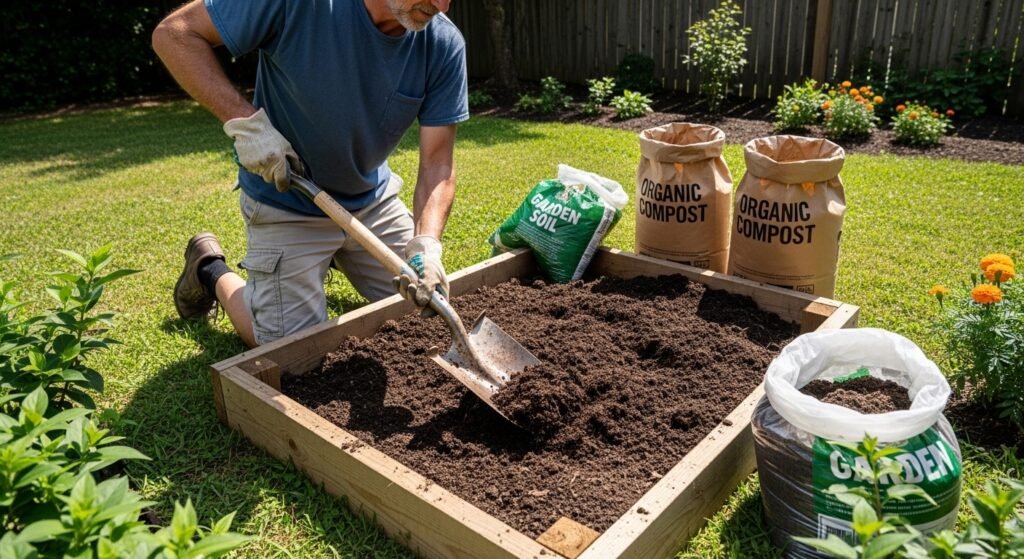
Step 3: Soil Isn’t Just Dirt
I used to think soil was soil. Dig a hole, put plant in, done.
No. Just no.
Good soil is the difference between plants that survive and plants that thrive.
The simple version:
- For containers: buy potting soil, not garden soil. Potting soil is light and drains well. Garden soil in a pot turns into concrete.
- For garden beds: mix in compost. Lots of it. Like a 2-3 inch layer mixed into the top 6-8 inches.
- If your soil is pure sand or pure clay, consider raised beds with good soil mix. Fighting bad soil will make you hate gardening.
Before you plant:
Break up any compacted dirt. Remove rocks and weird stuff. Mix in that compost. Your plants will send you thank you notes.
Step 4: Actually Putting Things in the Ground
Okay you’ve got your spot, your plants, your soil. Now what?
Read the tag
I know, I know. But seriously, read it. It’ll tell you how far apart to space things, how deep to plant, how much sun, all that.
If you lose the tag, Google the plant. Spacing matters—cram things too close and they compete for water and light. Too far apart and you’re just wasting space.
Water right after planting
Give everything a good drink to settle the soil around the roots. Not a flood, just a thorough soak.
Mulch is your friend
Put a layer of mulch (straw, wood chips, whatever) around your plants. It keeps moisture in, weeds out, and makes everything look more intentional. Don’t pile it against plant stems though—that causes rot.
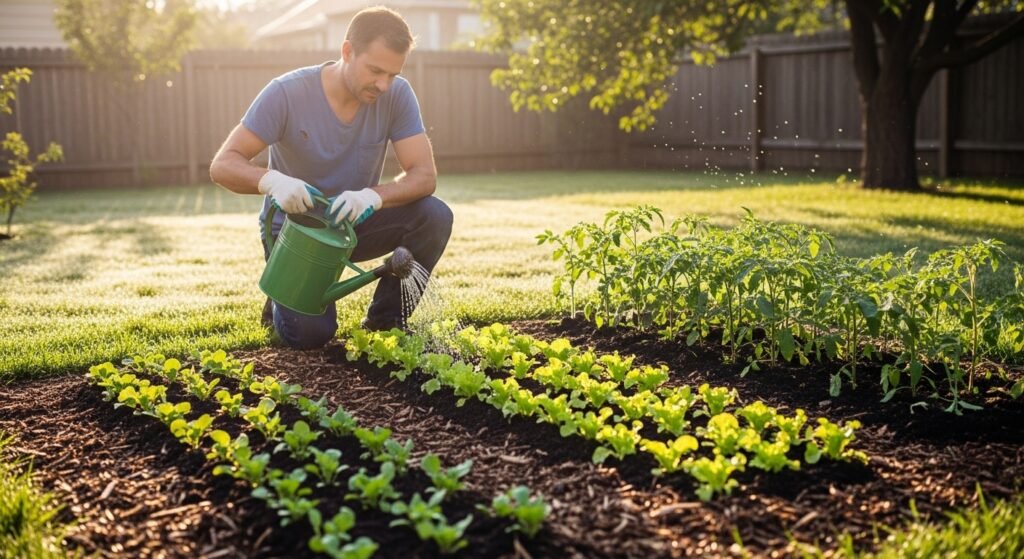
Step 5: Keeping Stuff Alive (The Hard Part)
This is where most beginners (including me) mess up.
Watering
Too much water kills plants. Too little also kills plants. Great, right?
Stick your finger in the soil about an inch deep. If it’s dry, water. If it’s still damp, wait.
Water in the morning if you can. Evening works too but leaves staying wet overnight can lead to disease. Midday sun evaporates half the water before plants get it.
Food
Plants need to eat. Mix in slow-release fertilizer when you plant, then add liquid fertilizer every few weeks during growing season. Follow package directions—more isn’t better.
Bugs
You’ll get them. Everyone does.
Start with the least harmful options. Spray aphids off with water. Pick off caterpillars by hand (gross but effective). Neem oil works for lots of things. Only bring out stronger stuff if you really need it.
Weeding
Weeds steal water and food from your plants. Pull them when they’re small. If you let them go to seed, you’ll be dealing with them for years.
Dead stuff
Trim off yellow leaves, dead flowers, anything that looks sad. It encourages new growth and keeps things looking tidy.
Step 6: Keep Notes (Future You Will Be Grateful)
I started a little garden journal my second year. Nothing fancy—just a notebook where I wrote down:
- What I planted and when
- What grew well and what didn’t
- When things got pests or diseases
- What I’d do differently next time
It’s been incredibly useful. Every spring I flip through it and remember exactly what worked and what was a disaster.
Step 7: Actually Enjoy It
This is the one I forget most often.
I get so focused on doing things right, on keeping everything alive, on fixing problems—that I forget to just sit in the garden and enjoy it.
So here’s your permission to do that.
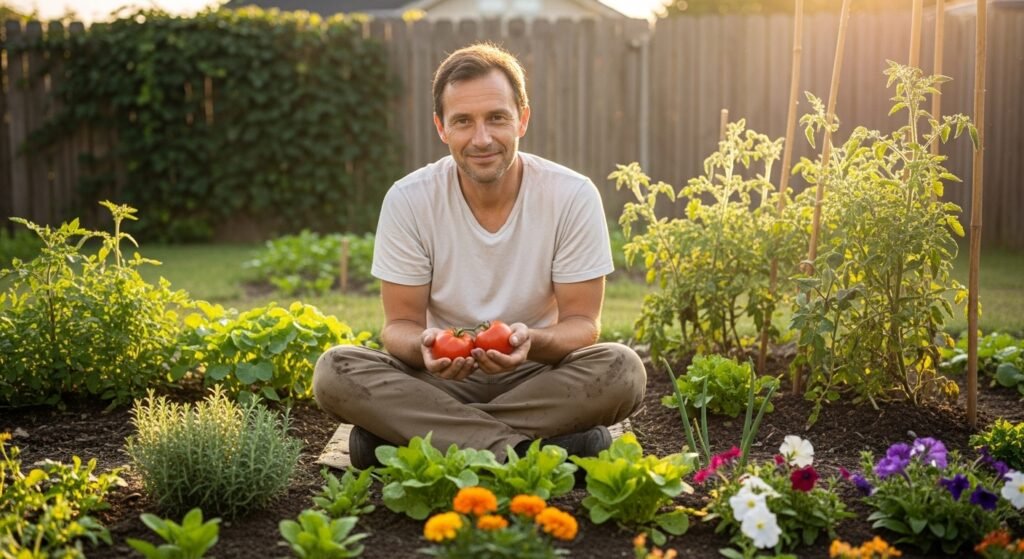
Sit on the ground. Smell the basil. Watch the bees do their thing. Pick a tomato and eat it right there, warm from the sun.
That’s the whole point. Not perfect plants or endless harvests. Just the quiet satisfaction of growing something with your own hands.
What I Wish I’d Known from the Start
- You will kill plants. Everyone does. It’s not a moral failing.
- Start small. Really. Smaller than you think.
- Ask questions. Garden center staff, neighbors with nice yards, random internet forums—most gardeners love sharing advice.
- Some years are great. Some years everything goes wrong. That’s gardening.
- The goal isn’t perfection. It’s showing up, paying attention, and learning as you go.
My first tomato plant died. My second one made it. Last year I had so many I was giving them away to neighbors.
It just takes time.
What about you?
Are you thinking about starting a garden? Already have one? What are you most excited to grow?
Drop a comment and tell me about it. I read every single one and honestly I love hearing what other people are planting.
And if this was helpful, pass it to someone else who’s been thinking about gardening but hasn’t taken the leap yet. Today’s a good day to start. 🌱