
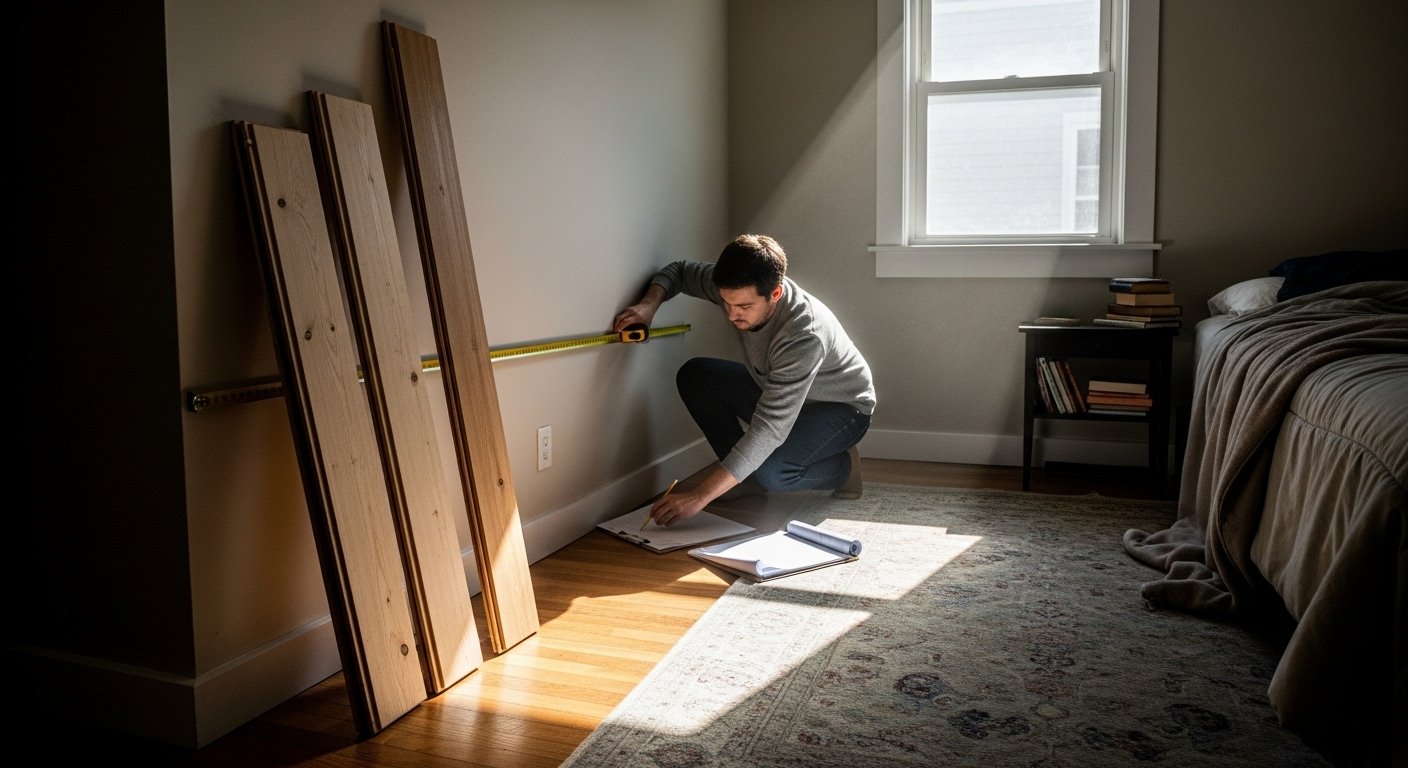
The Time I Botched My Flooring Math (And What It Taught Me)
I’m usually pretty good with numbers.
So when I decided to install new flooring in my bedroom, I figured the square footage calculation would be the easy part. Measure the room, multiply length times width, order the materials, done.
Yeah. Not quite.
Turns out my bedroom isn’t a perfect rectangle. There’s this weird nook by the window, a closet that juts out, and somehow I managed to miss all of it in my measurements.
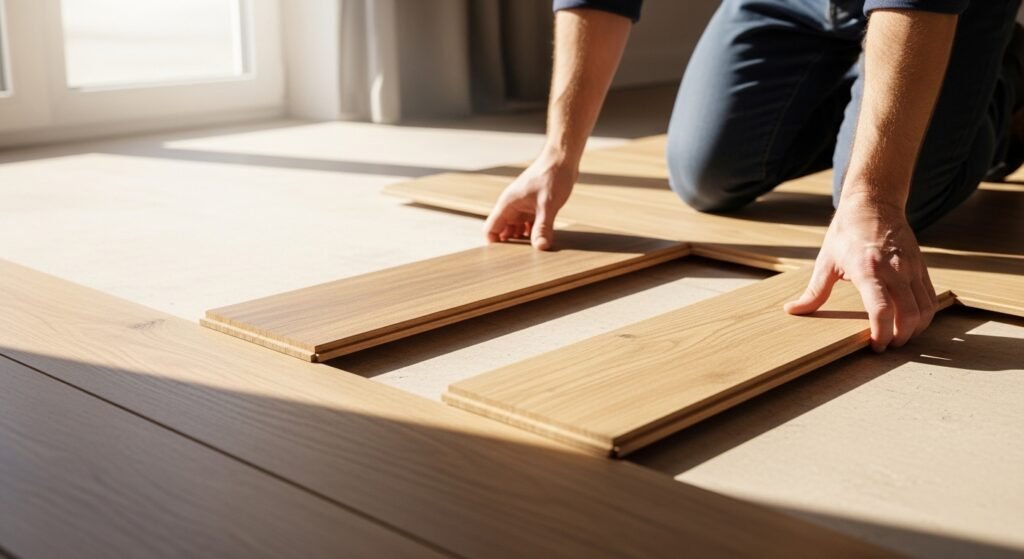
I ordered what I thought was enough flooring. Started installing. Got to the last corner and realized I was about four planks short.
Four planks. That’s all. But the store was forty minutes away, they were almost out of my color, and I had to pause the whole project, drive like a maniac, and pray they still had stock.
They did. Barely. But I learned my lesson.
Now I measure everything twice. Sometimes three times. And I’ve gotten pretty good at calculating square footage for all kinds of spaces—weird shapes, sloped ceilings, you name it.
Let me save you from making the same mistake.
Step 1: Grab Your Stuff
You don’t need anything fancy:
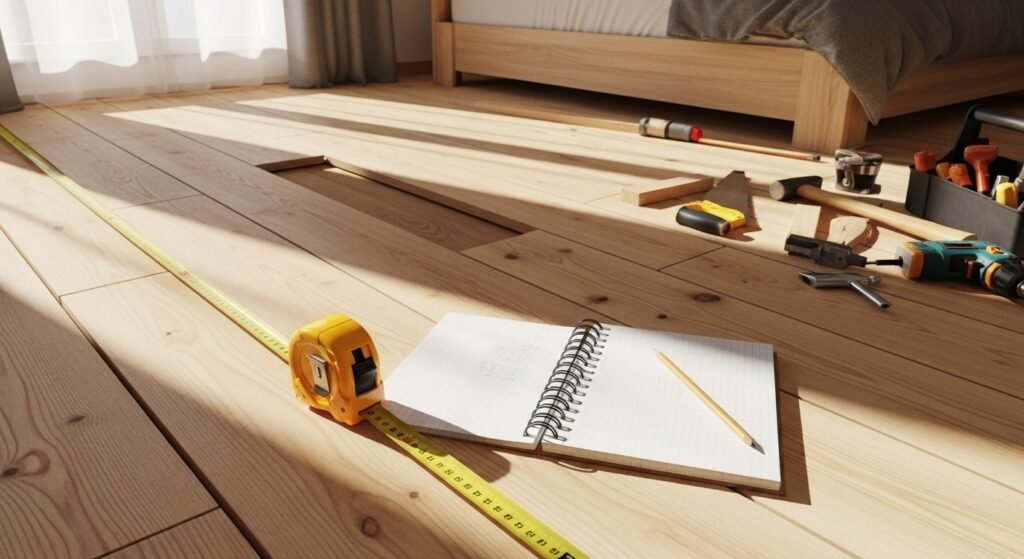
- A tape measure (the longer, the better—25 feet is good)
- Something to write on (paper, phone notes, whatever)
- A calculator (your phone works)
- Maybe a laser measure if you’re fancy or have really big rooms
That’s literally it. You’re already prepared.
Step 2: Start With the Basics (If Your Room Is Normal)
Most rooms are rectangles or squares. If yours is one of them, congratulations—this is easy.
Measure the longest wall. That’s your length.
Measure the shorter wall. That’s your width.
Write both down in feet. If your tape measure shows inches, that’s fine. We’ll deal with that in a minute.
Then do the thing you probably already know:
Length × Width = Square Feet
So if your room is 12 feet long and 10 feet wide:
12 × 10 = 120 square feet.
Done. Easy.
But if your room is anything like mine, it’s probably not that simple.
Step 3: Weird Rooms Need a Different Approach
My bedroom has this little alcove where a desk used to live. If I’d just measured the main rectangle and called it done, I would’ve been way off.
Here’s what you do with L-shaped or irregular rooms:
Break it into pieces.
Look at your room and find the natural rectangles within it. Maybe it’s a big main area plus a bump-out for a closet. Maybe there’s a hallway section.
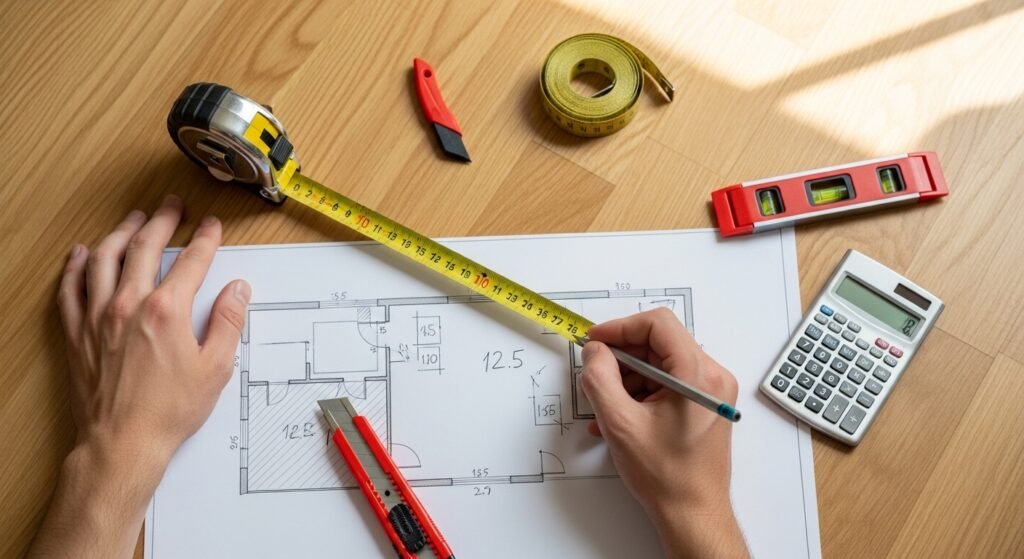
Measure each rectangle separately. Calculate each one’s square feet. Then add them all up.
Example:
- Main area: 12 ft × 10 ft = 120 sq ft
- Alcove: 4 ft × 3 ft = 12 sq ft
- Closet: 3 ft × 2 ft = 6 sq ft
Total = 120 + 12 + 6 = 138 square feet.
See? Not hard. Just takes a minute to think it through.
Step 4: What About Stuff in the Way?
Here’s something that tripped me up once.
I was measuring for paint, not flooring. Calculated all the wall space perfectly. But I forgot to subtract the giant window and the sliding glass door.
Ended up with way too much paint. Not the worst problem in the world, but still wasted money.
For flooring: You usually measure the whole floor area, including under cabinets and built-ins. You’re covering that space whether something’s sitting there or not.
For painting: You’ll want to subtract windows and doors. Rough rule—a standard door is about 20 square feet, a window varies. Measure them and subtract if you want to be precise.
For furniture: You’re measuring usable floor space, so include everything. That weird column in the middle of the room? Measure around it. You need to know it’s there.
Step 5: Inches Are Annoying But Manageable
Your tape measure probably shows feet and inches. That’s fine until you need to multiply and end up with fractions.
Here’s the trick:
Inches ÷ 12 = Feet
So 6 inches = 0.5 feet
9 inches = 0.75 feet
3 inches = 0.25 feet
If your room is 12 feet 6 inches long, that’s 12.5 feet. Multiply by width and you’re good.
Or if math isn’t your thing, just measure in inches, multiply, then divide by 144.
Length in inches × Width in inches ÷ 144 = Square feet.
Same result, just more numbers.
Step 6: Actually Do the Math
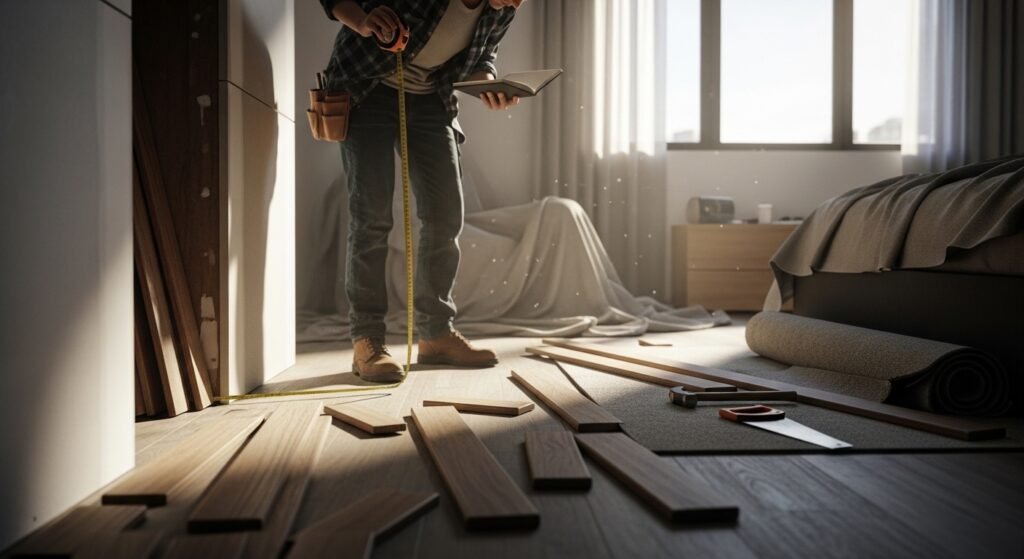
This part is straightforward, but here’s where people mess up.
Do it twice.
I’m serious. Calculate once. Then calculate again, maybe in a different order or on a different day. If the numbers match, you’re probably right. If they don’t, measure again.
Also, round up a little. Not a lot—but if you’re getting 127.4 square feet, call it 128. That extra half-foot won’t kill you, and it’s better than coming up short.
Step 7: Sloped Ceilings Are Tricky
Attic rooms. Bonus rooms. That weird space under the stairs.
If you’re measuring for flooring, you measure the floor. The ceiling slope doesn’t matter—the floor is what you’re covering.
If you’re measuring for paint or wall treatments, you need the wall area. That gets more complicated. For sloped ceilings, measure the wall height at the tallest point and the shortest point, average them, then multiply by length.
Honestly? If you’ve got a really weird sloped room, sketch it out and bring it to the hardware store. The people there deal with this stuff all day and can help.
Step 8: Apps Can Help
I’m old school—I still use paper and pencil. But there are apps that make this easier.
You draw your room shape, tap in measurements, and the app calculates everything. Some even let you drag and drop furniture to test layouts.
If you’re doing multiple rooms or a whole house, an app might save you time. I’ve used a few. They work fine.
Step 9: Why This All Matters
Here’s what accurate measurements get you:
For flooring: You buy exactly what you need plus a little extra for mistakes (pro tip: add 10% for waste, especially with tile or wood where cuts happen).
For painting: You buy the right amount of paint instead of guessing and either running out or having five gallons left over.
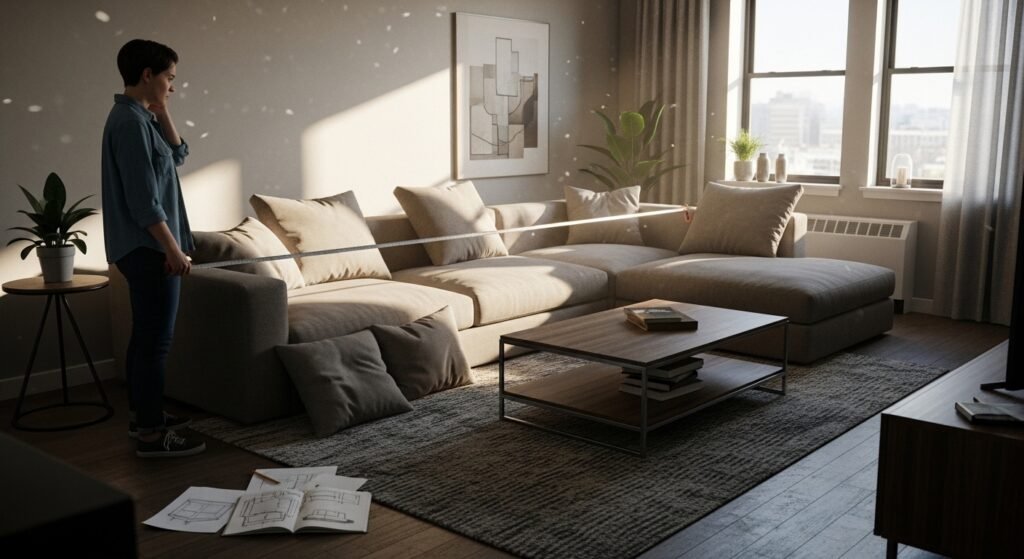
For furniture: You know that giant sectional will actually fit without blocking every pathway.
For remodeling: Contractors need accurate numbers for quotes. Wrong measurements mean wrong prices.
Step 10: Check Your Work
This is the boring but necessary part.
Measure again. Have someone else measure if possible. Double-check your math.
One time I misread 13 feet as 18 feet. That extra five feet would’ve made me order way too much carpet. Caught it because I measured twice.
Little mistakes happen. Catching them before you spend money is the goal.
What I Do Now
After that flooring disaster, I developed a system:
- Measure the room. All of it. Walls, alcoves, closets.
- Sketch it on paper with dimensions written down.
- Break irregular rooms into rectangles.
- Calculate each section, then add them up.
- Add 10% for waste if buying materials.
- Measure again to confirm.
- Keep the sketch with my project files in case I need it later.
Takes maybe 20 minutes for a whole room. Saves hours of frustration and returns trips to the store.
The Truth About Measuring
Here’s the thing.
Measuring a room isn’t hard. It’s just easy to do badly when you’re in a hurry or feeling confident.
That confidence is what gets you. “I’ve got this, I don’t need to write it down.” Then you forget. Or you misread the tape. Or you round wrong.
Slow down. Write everything. Check twice.
Future you will be so grateful when that new furniture fits perfectly and you’re not driving to the store at 7pm hoping they have more flooring in stock.
What about you?
Ever messed up a measurement and paid the price? Tell me about it in the comments—I promise not to judge, and your story might save someone else.
And if this was helpful, pass it to a friend who’s about to start a home project. We all need reminders sometimes. 📏