
What I Learned From Way Too Many Trips to Lowe’s Garden Center
I have a problem.
It started innocently enough. I needed a shovel. Maybe some soil. A reasonable Saturday morning errand.
Three hours later, I was loading my car with plants I hadn’t planned to buy, tools I didn’t know existed, and some decorative frog that caught my eye for reasons I still can’t explain.
If you’ve ever been to a Lowe’s Garden Center, you probably understand.
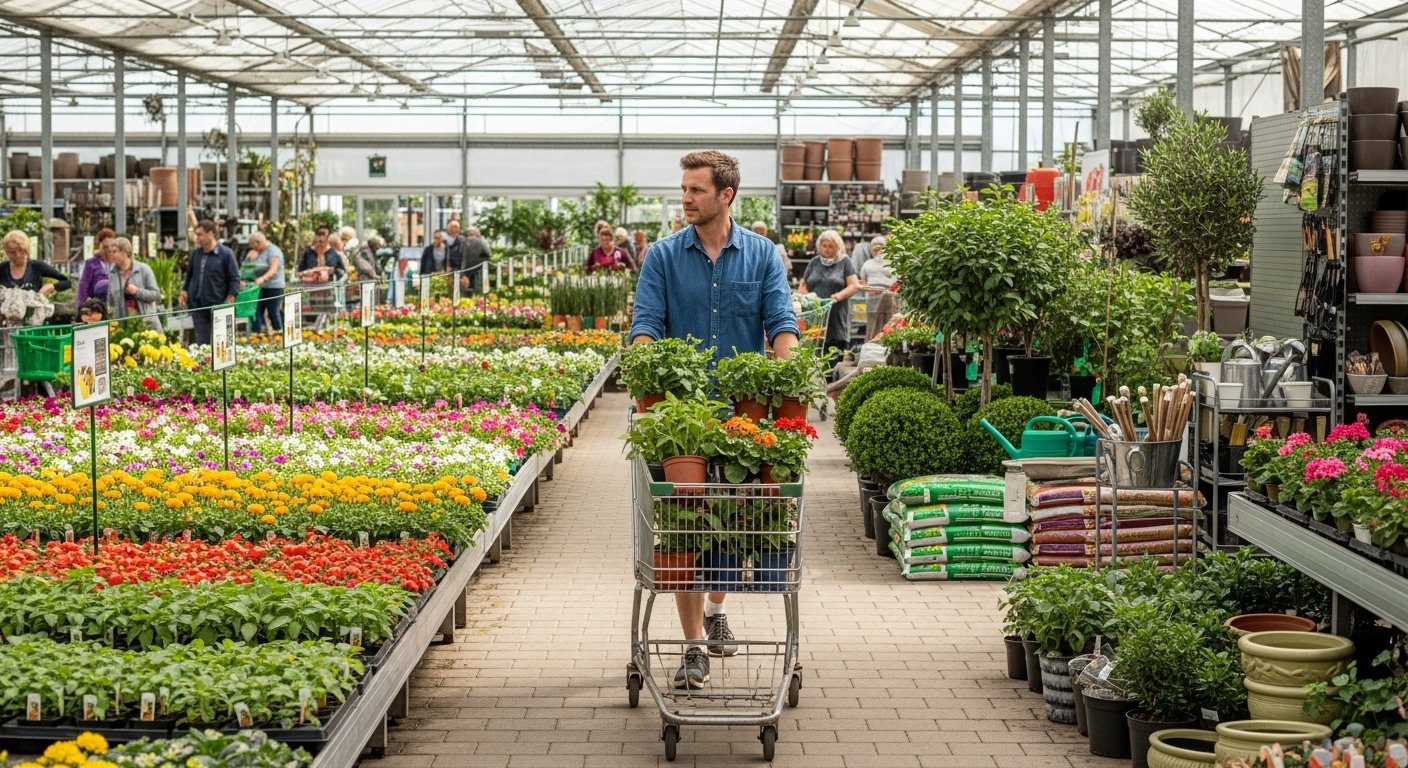
There’s something about that place. The rows of colorful flowers, the smell of soil and pine, the way the light filters through the greenhouse plastic. It just gets you. Before you know it, you’re walking out with a cart full of things you’re convinced will transform your yard.
And sometimes? They actually do.
Why I Keep Going Back
Look, there are fancier nurseries out there. Boutique plant shops with rare specimens and pottery that costs more than dinner. I’ve been to them. They’re nice.
But Lowe’s is where I actually get stuff done.
The plant selection is legit
We’re not talking a few sad racks of flowers. We’re talking entire sections dedicated to:
- Annuals that’ll bloom their faces off all summer
- Perennials that come back every year like reliable friends
- Vegetables and herbs that actually taste like something
- Shrubs and trees that give your yard structure
- Indoor plants for those of us who want greenery year-round
And they stock stuff that grows where you actually live. Different regions get different plants, which sounds obvious but you’d be surprised how many places don’t bother.
Everything in one place
This is the real win for me.
I can grab some tomato seedlings, then wander two aisles over for exactly the right soil. Pick up a new hose while I’m there. Remember I need gloves. Oh, and that decorative frog (still don’t regret it).
No running all over town. No making lists and forgetting things. Just one stop and I’m set.
People who actually garden
The staff in the garden center aren’t just employees—they’re usually plant people. I’ve gotten advice that saved my peppers from certain death, learned why my hydrangeas looked sad, and discovered when to prune things I’d been butchering for years.
One guy named Rick talked me through soil pH like he was explaining football plays. I didn’t understand half of it, but my plants thanked him.
How Not to Mess Up Your Trip
I’ve made enough mistakes that you don’t have to.
Make a list. Actually.
I know, I know. You’re gonna look at the plants and deviate from the list anyway. That’s fine. But at least have some idea what you’re there for.
Ask yourself:
- Am I filling empty space with color? (annuals)
- Am I trying to grow food? (vegetables, herbs)
- Do I want things that last years? (perennials, shrubs)
- Is this a “I just want something pretty for my porch” situation?
Write something down. Future you will spend less time wandering aimlessly.
Know your space
This one hurt to learn.
I bought plants that needed full sun and put them in my shady yard. Bought shade lovers and stuck them in baking sun. Wondered why everything looked miserable.
Now I check my garden first. How many hours of sun? Morning or afternoon? Is the soil wet or dry? Takes five minutes and saves so much money.
Set a number
Gardening stuff adds up fast. Plants here, soil there, oh that tool looks useful, and suddenly you’ve spent $200 on what was supposed to be a quick trip.
I give myself a number now. Sometimes I stick to it. Sometimes I don’t. But having it in mind helps at least a little.
Plants Worth Grabbing
After too many trips, here’s what I keep coming back to:
Flowers that actually perform
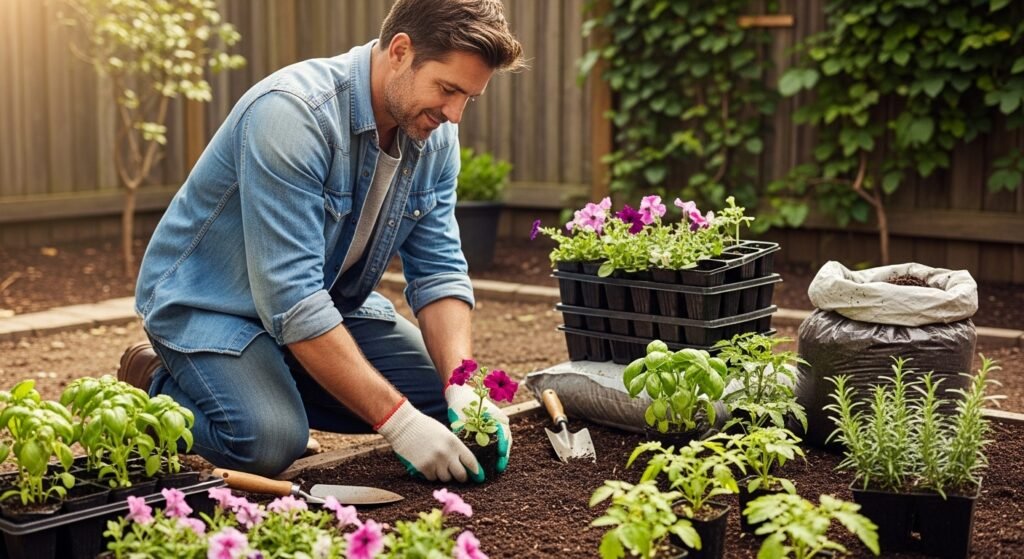
- Petunias (color for months, forgiving if you forget to water)
- Marigolds (bright, tough, bugs leave them alone)
- Hostas (for shady spots where nothing else grows)
- Lavender (smells amazing, bees love it, looks good dead or alive)
Food that’s worth growing
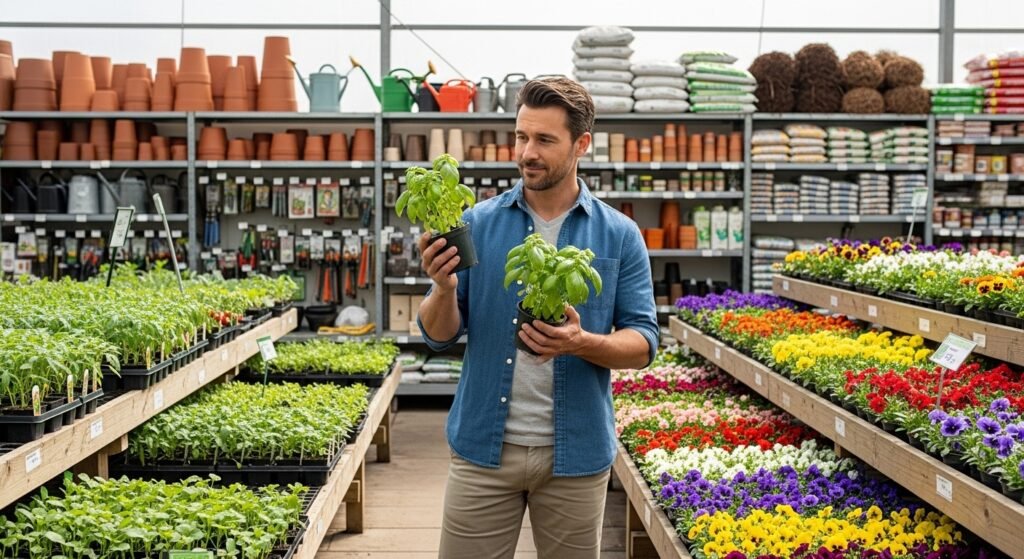
- Basil (grows like weeds, makes everything taste better)
- Cherry tomatoes (almost impossible to kill, endless harvest)
- Peppers (pretty plants, productive, great in everything)
- Lettuce (quick, satisfying, grows in containers)
Things that add structure
- Boxwoods (green all year, you can shape them or not)
- Hydrangeas (big dramatic flowers, surprisingly easy)
- Dwarf fruit trees (yes you can grow lemons or apples)
- Ornamental grasses (movement, texture, zero effort)
Tools You’ll Actually Use
You don’t need everything in the tool section. Start here:
The basics
- Good gloves (cheap ones fall apart, spend a little more)
- Hand trowel (for planting things)
- Shovel (for digging actual holes)
- Pruners (for cutting stuff back)
- Rake (leaves happen)
Watering stuff
- Hose with an adjustable nozzle (gentle for babies, strong for everything)
- Watering can (for pots near the house)
- Maybe a sprinkler if you have a big area
Soil and food
- Potting soil for containers (regular dirt doesn’t work in pots)
- Compost to mix into beds (plants go crazy for this)
- Fertilizer for specific things (tomato food, flower food, whatever)
What to Do When
Gardening changes with the calendar. Here’s roughly how it goes:
Spring
Everything wakes up. Plant cool-weather stuff. Clean up winter mess. This is the hopeful season where anything seems possible and you haven’t killed anything yet.
Summer
Watering becomes your routine. Morning or evening so it doesn’t just evaporate. Mulch helps keep moisture in. Watch for bugs—they will show up.
Fall
Plant bulbs for next spring. Clean up leaves if you’re into that. Take cuttings of things you want to keep inside over winter.
Winter
Mostly you wait. Protect stuff from frost if you care enough. Plan next year’s garden. Maybe buy indoor plants to scratch the itch.
My Lowe’s Garden Story
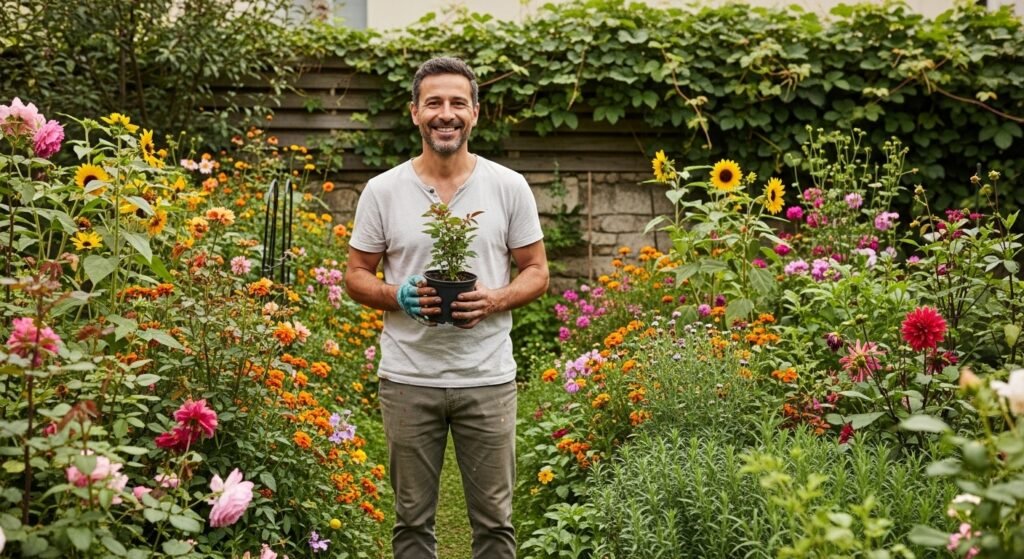
Last spring I decided my backyard needed help. It was just grass and a fence and not much else.
Went to Lowe’s, grabbed some petunias (pink and purple, don’t ask why), a basil plant, and a little cherry tomato I couldn’t resist. Staff person named Diane pointed me toward the right soil and told me not to overwater (I still overwatered).
Over the next few weeks I added more. A hydrangea. Some peppers. A tiny lemon tree that has no business growing in my climate but is trying anyway.
By summer I was sitting out there every evening, watching things grow, eating tomatoes off the plant, feeling weirdly proud of myself.
That whole thing started with one trip and a few impulse buys.
Anyway
Here’s the thing about Lowe’s Garden Center.
It’s not precious. It’s not exclusive. It’s not the kind of place where you feel judged for not knowing the difference between annuals and perennials (I didn’t for years).
It’s where regular people can walk in, grab stuff that actually works, and figure things out as they go. Staff who know things. Plants that’ll grow. Tools that won’t break after three uses.
You don’t need to be an expert. You just need to start.
Kill some plants along the way? Welcome to the club. I’ve murdered more than I can count. But the ones that live? They make the whole thing worth it.
What about you?
Have you ever gone to Lowe’s for “just one thing” and left with a car full of plants? (No judgment, happens to the best of us.)
Or maybe you’ve got a favorite plant that refuses to die no matter what. Tell me about it in the comments. I genuinely want to know.
And if this was helpful, pass it to someone else who’s been thinking about starting a garden but hasn’t pulled the trigger yet. Today’s a good day to start. 🌿